
Espresso buying guides, minus the jargon
What home espresso gear really costs, how to choose it, and the traps brands don't advertise. Written from deep research, not press releases.
Espresso Machines
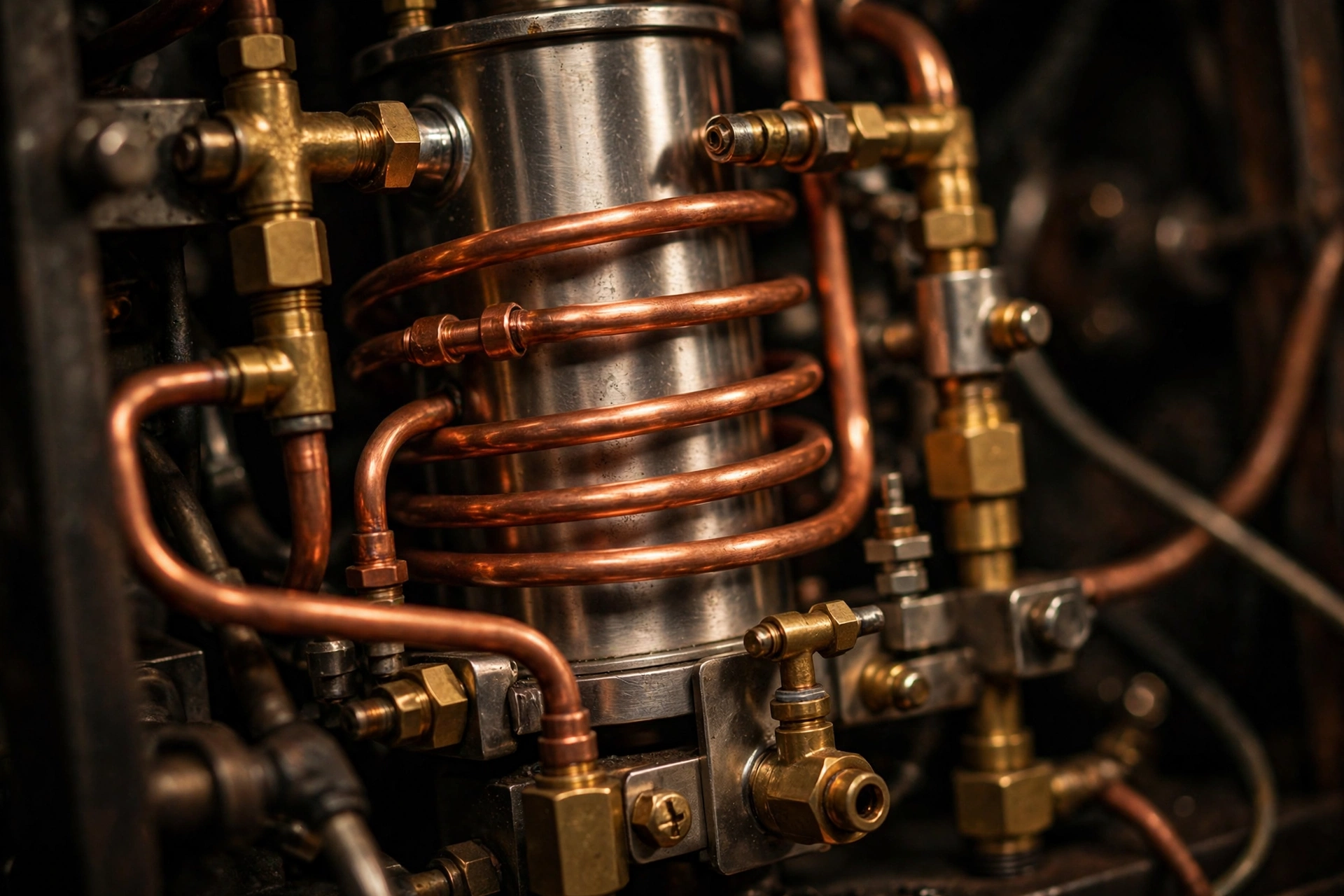
Single Boiler vs Heat Exchanger vs Dual Boiler vs Thermoblock: Which Is Right for You?
Thermoblock vs single boiler vs heat exchanger vs dual boiler: how each espresso boiler brews and steams, and which one fits how you actually make coffee.
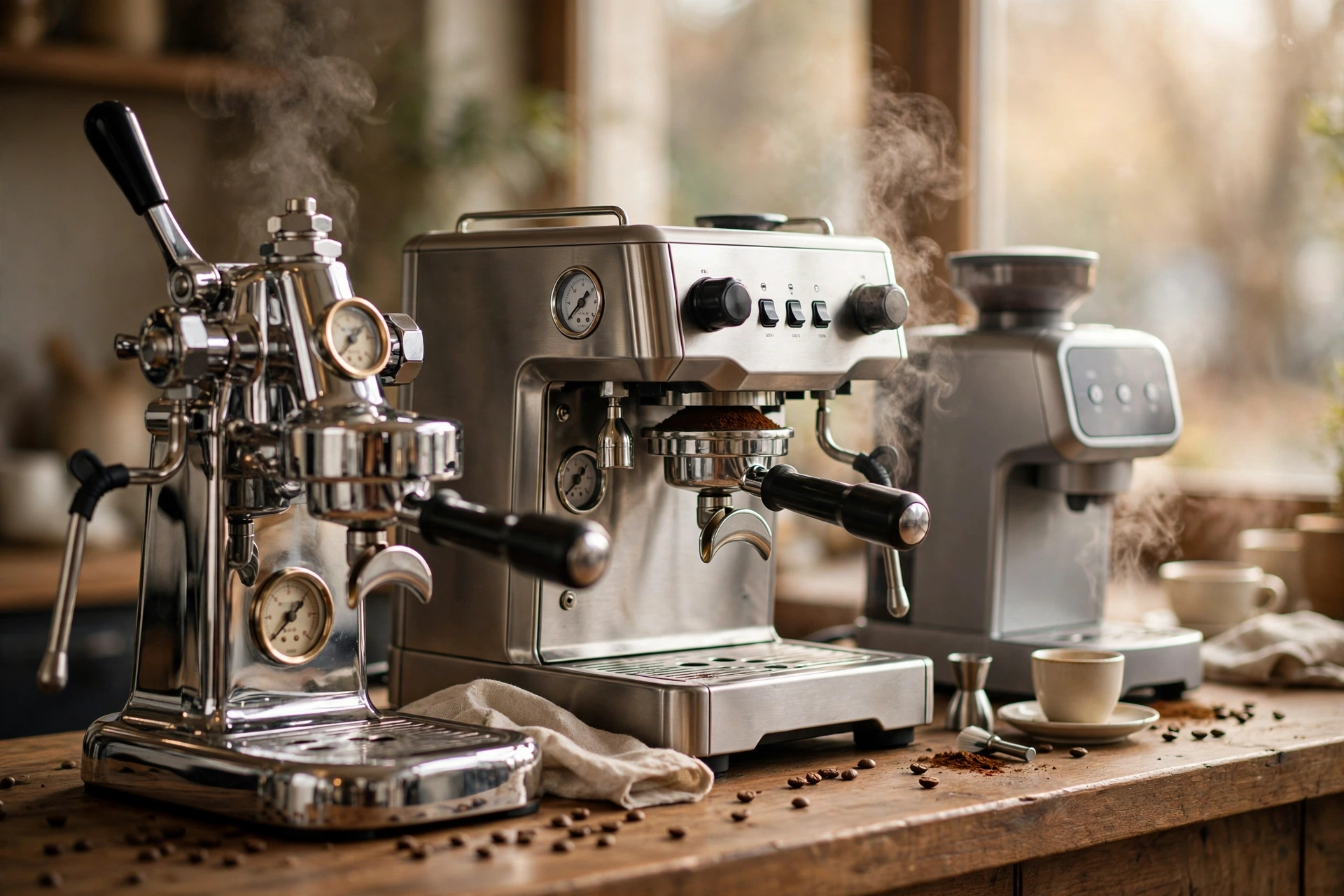
Espresso Machine Types Compared
Every espresso machine heats water, builds ≈9 bars of pressure, and delivers it evenly — types differ only in who does the work. Manual to super-auto compared.
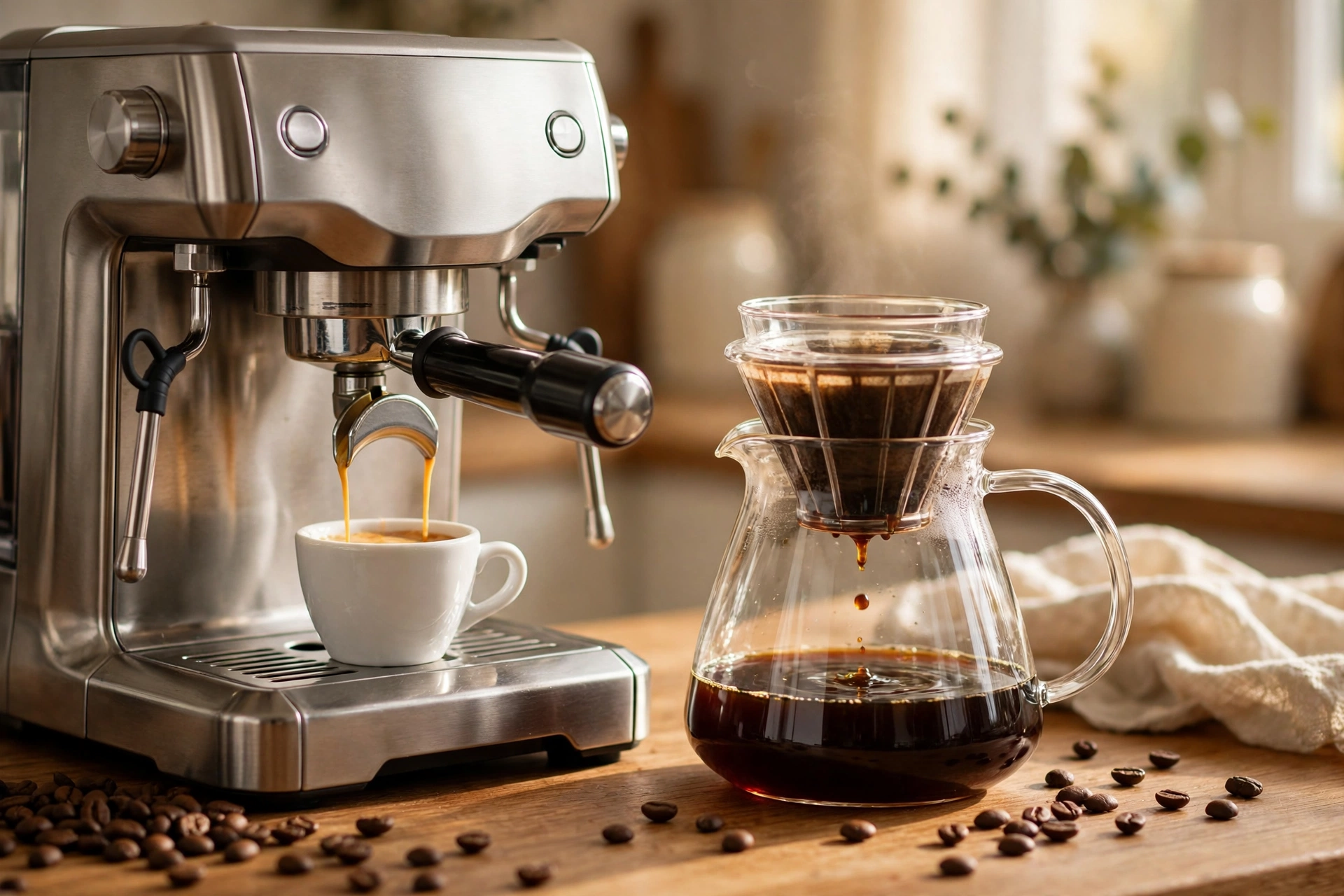
Espresso vs Drip Coffee Maker
Espresso uses pressure to extract in 30 seconds; drip uses gravity over minutes. That difference explains the taste, crema, price, and learning curve.
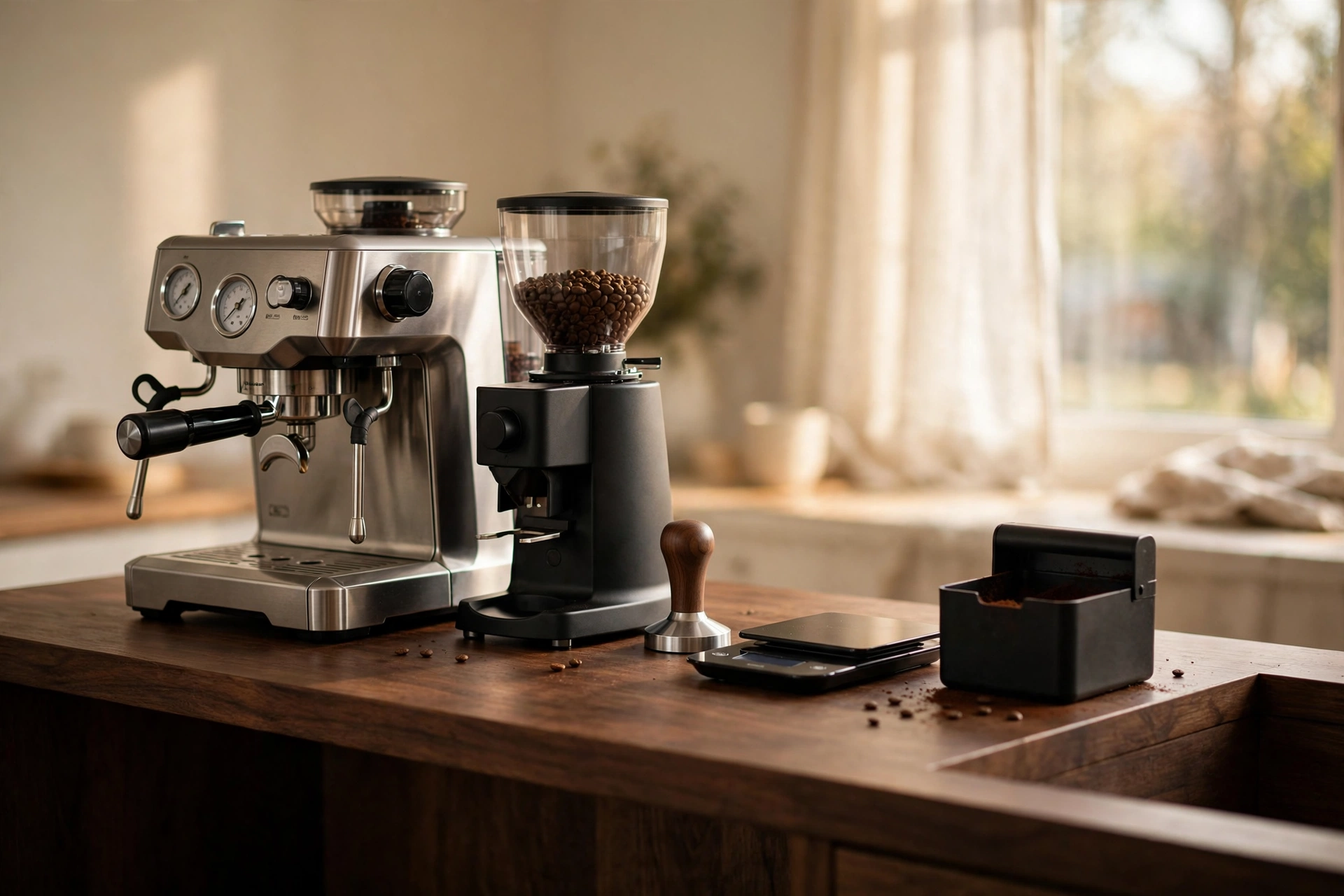
How Much Counter Space for Espresso?
Plan for 24 inches (60 cm) of counter width and 20 inches of depth — an espresso setup is a working workflow zone, and spec sheets miss the clearances.
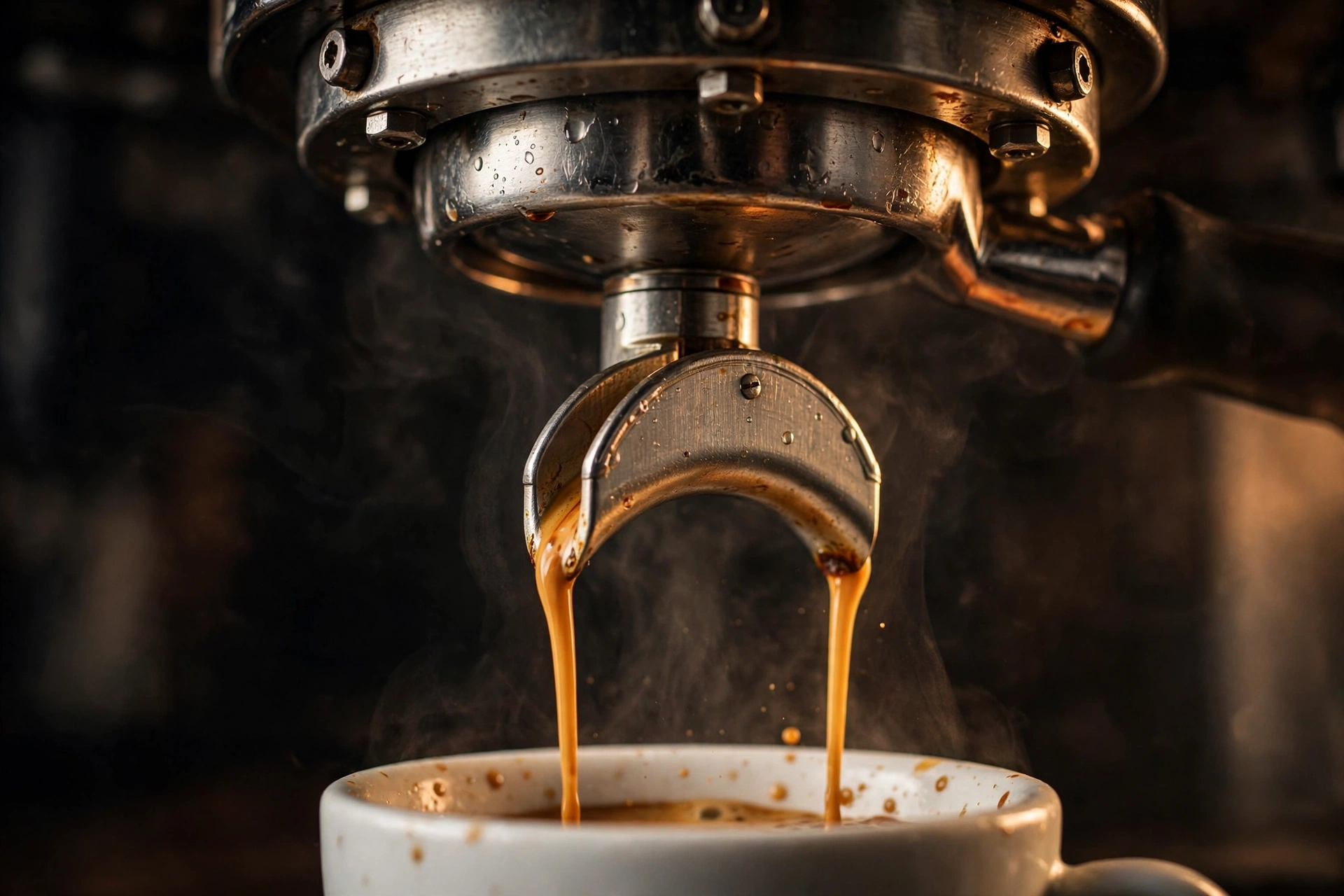
How Does an Espresso Machine Work?
An espresso machine pushes 90–94°C water through finely ground coffee at ≈9 bars, pulling a shot in 25–30 seconds. A look at the heater, pump, and group head.
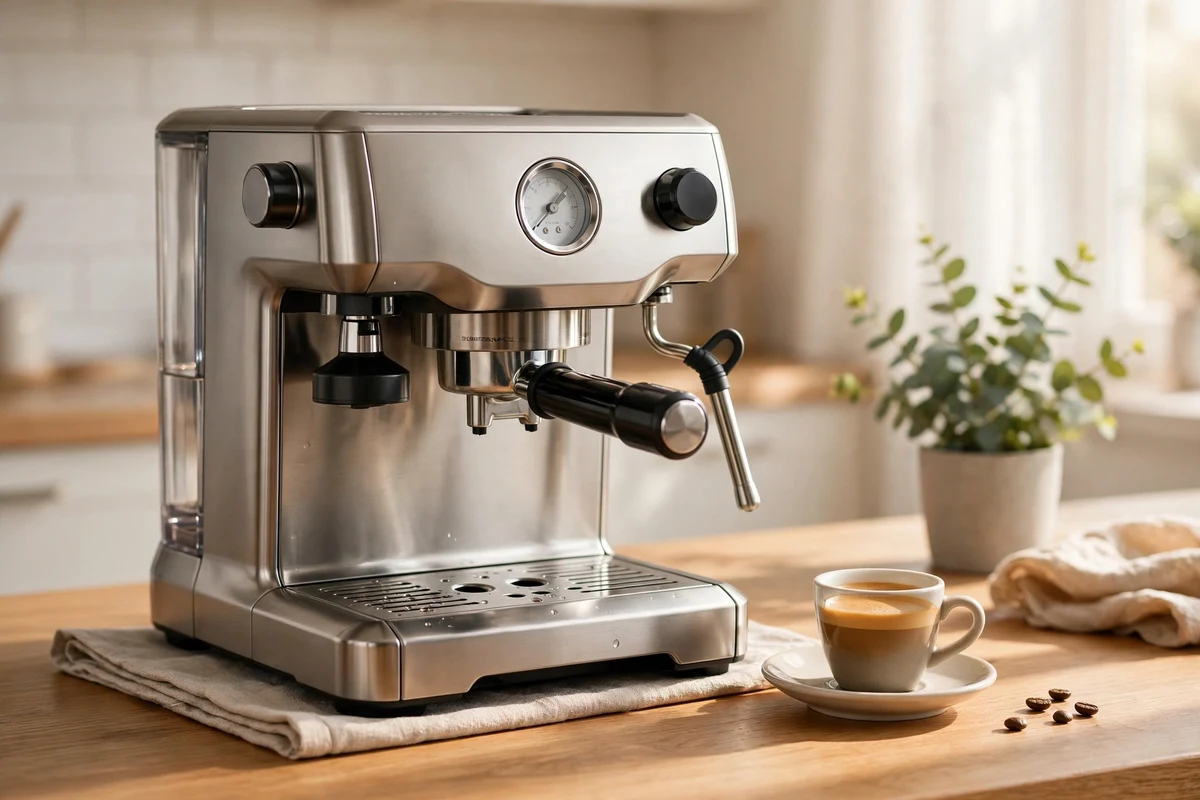
How Long Do Espresso Machines Last?
Most home espresso machines last 5 to 15 years. Budget thermoblock models wear out in about 5 years, while serviceable prosumer machines run 15 or more.
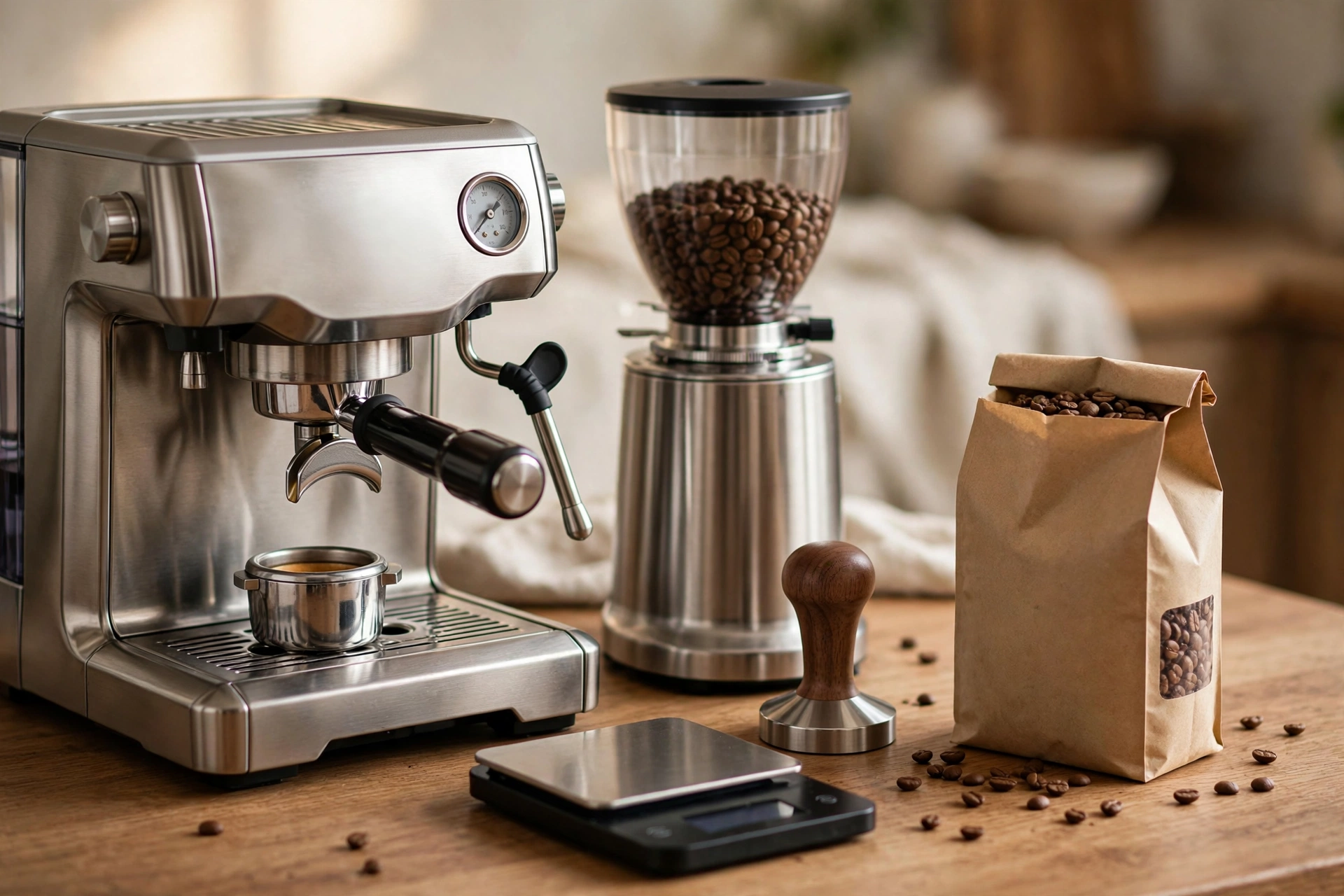
Home Espresso Setup Cost in 2026
A home espresso setup costs $150 to $2,500+, but the machine is only half the budget — the grinder, accessories, and dial-in coffee matter just as much.
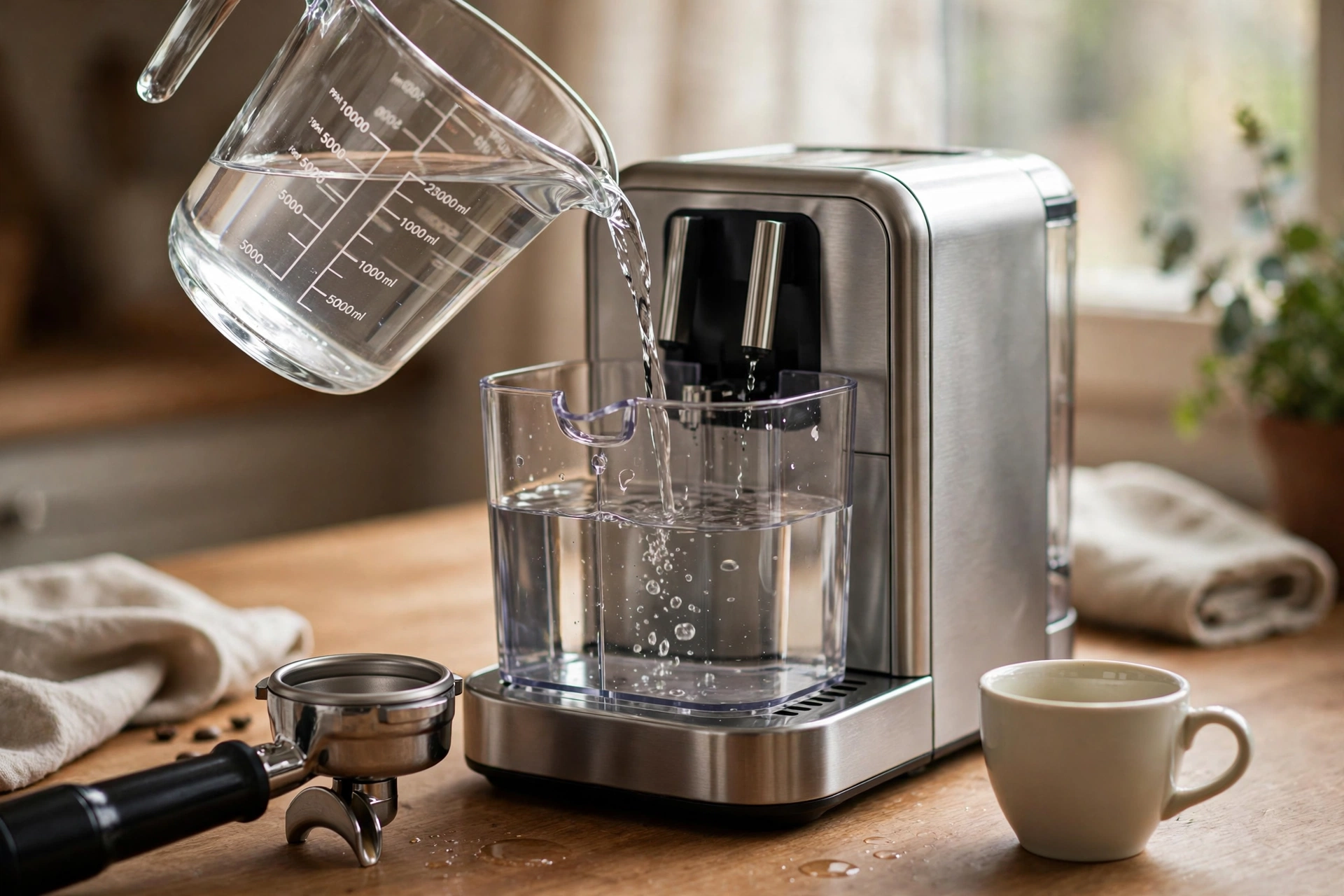
Espresso Machine Descaling Guide
Descale every 2–3 months with hard water, every 3–6 with soft. Limescale insulates your boiler and wrecks temperature stability — here's how to remove it.
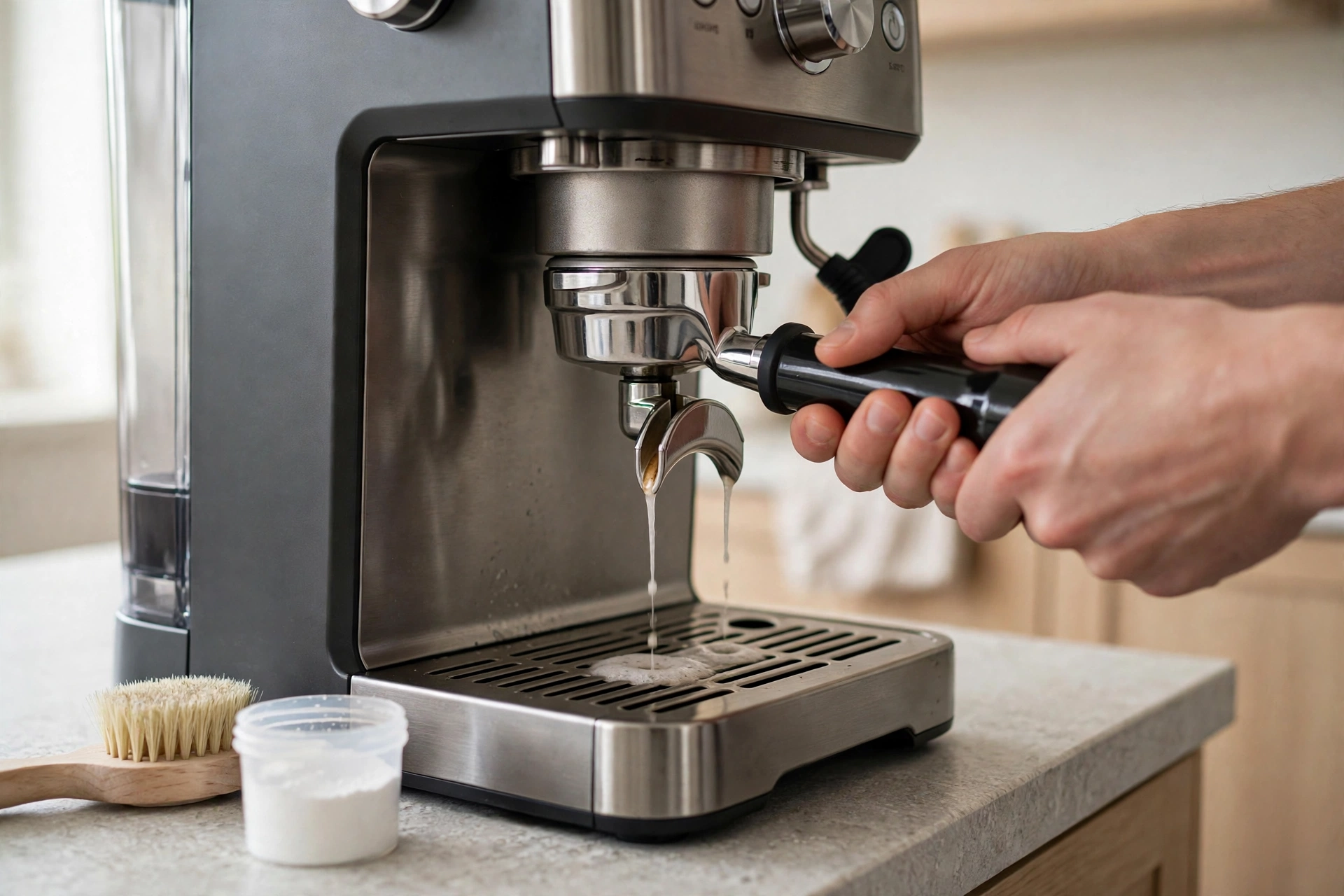
How to Backflush an Espresso Machine (and When Not To)
Backflushing forces water and detergent backwards through the group head and 3-way solenoid valve to strip rancid coffee oils a forward flush never reaches. Water-only after every session, detergent every 1 to 2 weeks — but only if your machine has a 3-way valve.
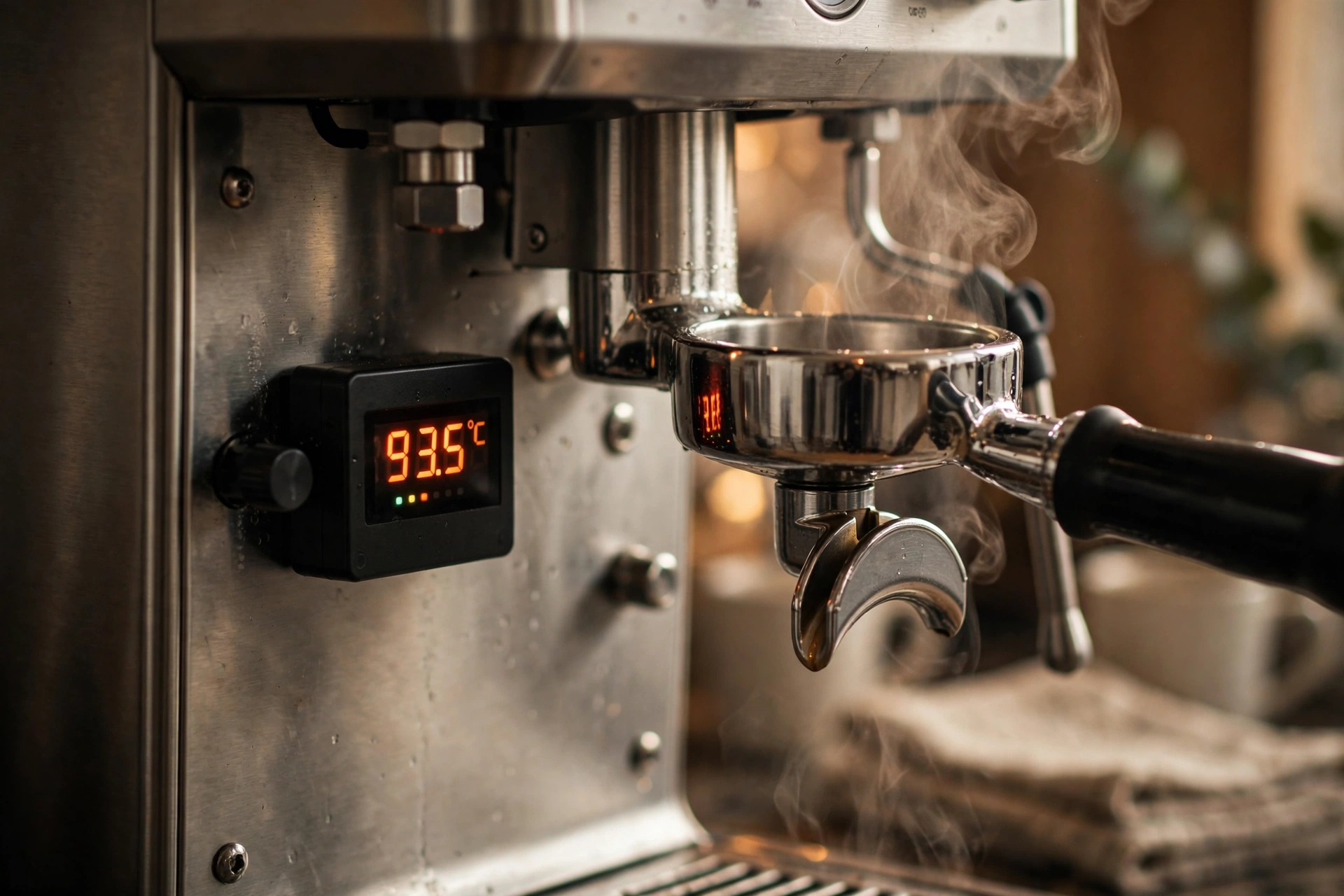
Are PID Controllers Worth It?
Yes, for most: a PID holds brew water within ≈1°C instead of a thermostat's 10°C swing. Here is when that stability changes the shot and when it does not.
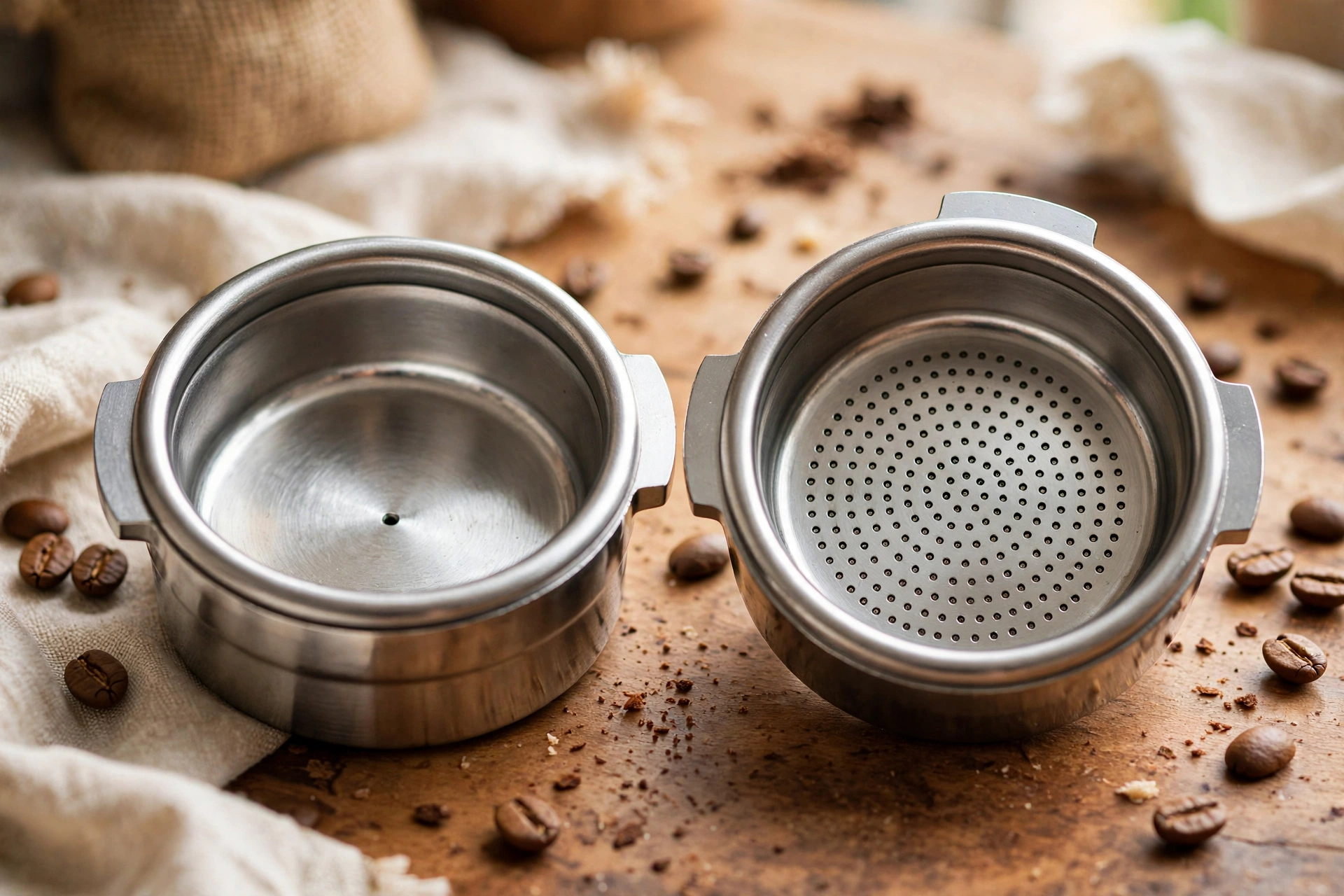
Portafilter Baskets Explained
Pressurized baskets create resistance with a second wall and tiny outlet; non-pressurized baskets rely on the puck, rewarding fresh grounds and a grinder.
Grinders
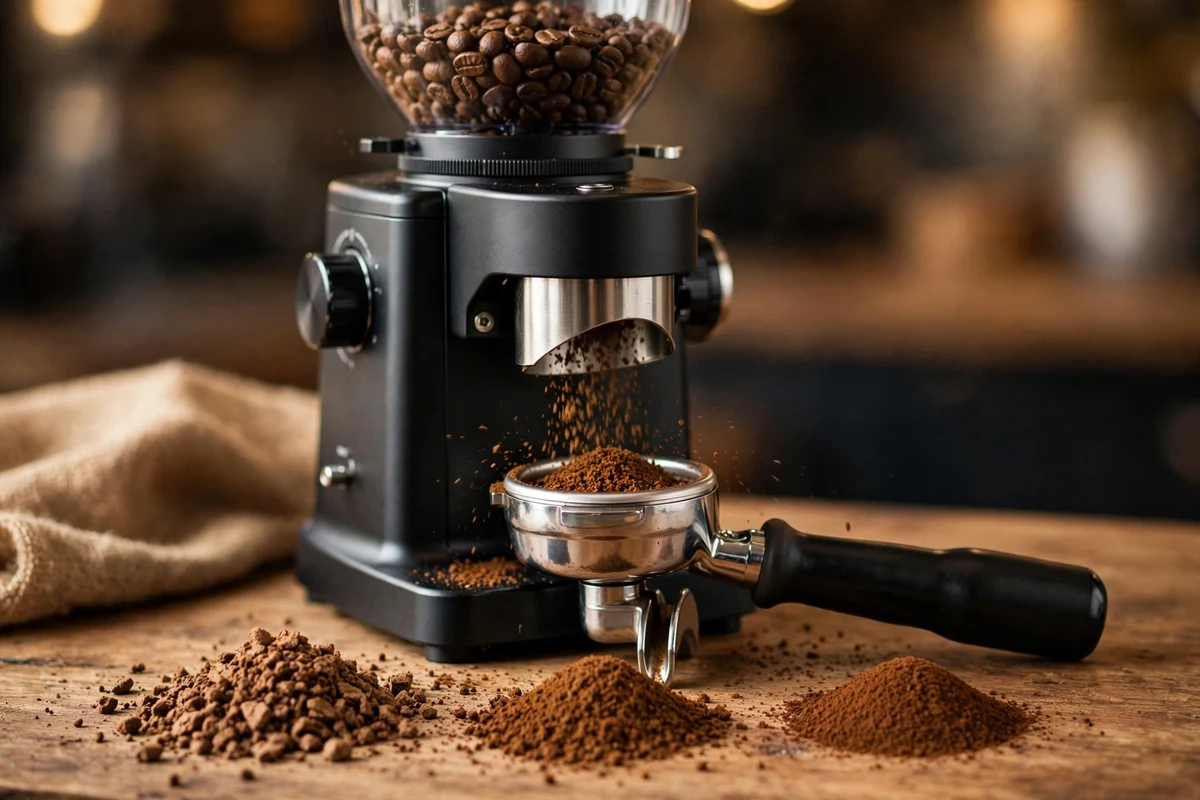
Espresso Grind Size Guide
Espresso uses a fine, table-salt grind: 18g in should yield about 36g out in 25-30 seconds. Here is why particle size controls flow and how to dial it in.
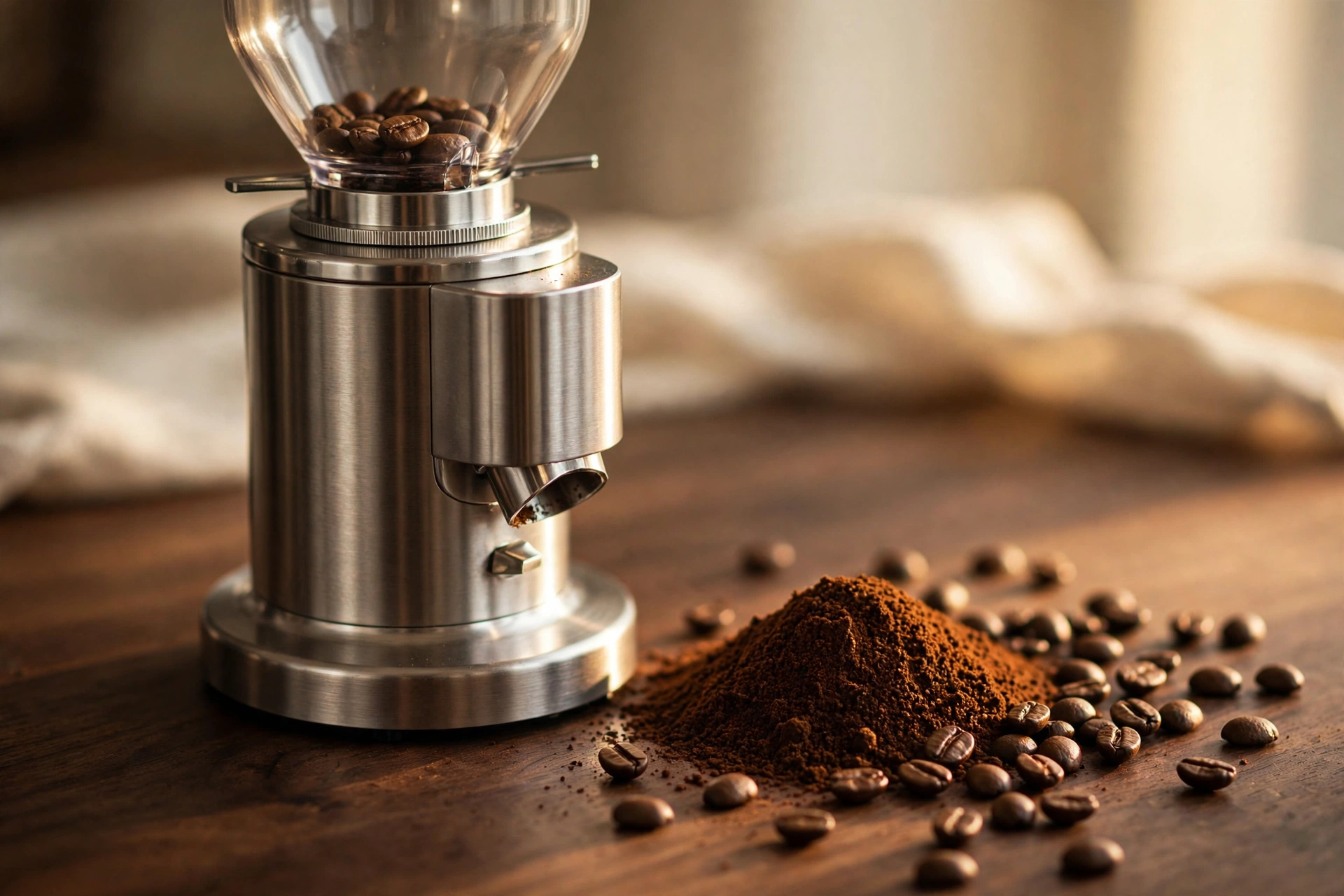
How Much Should You Spend on an Espresso Grinder? ($150–$500, Honestly)
How much should a home espresso grinder cost? $150–$250 for capable, $250–$500 for genuinely good — the grinder decides the extraction, not the machine.
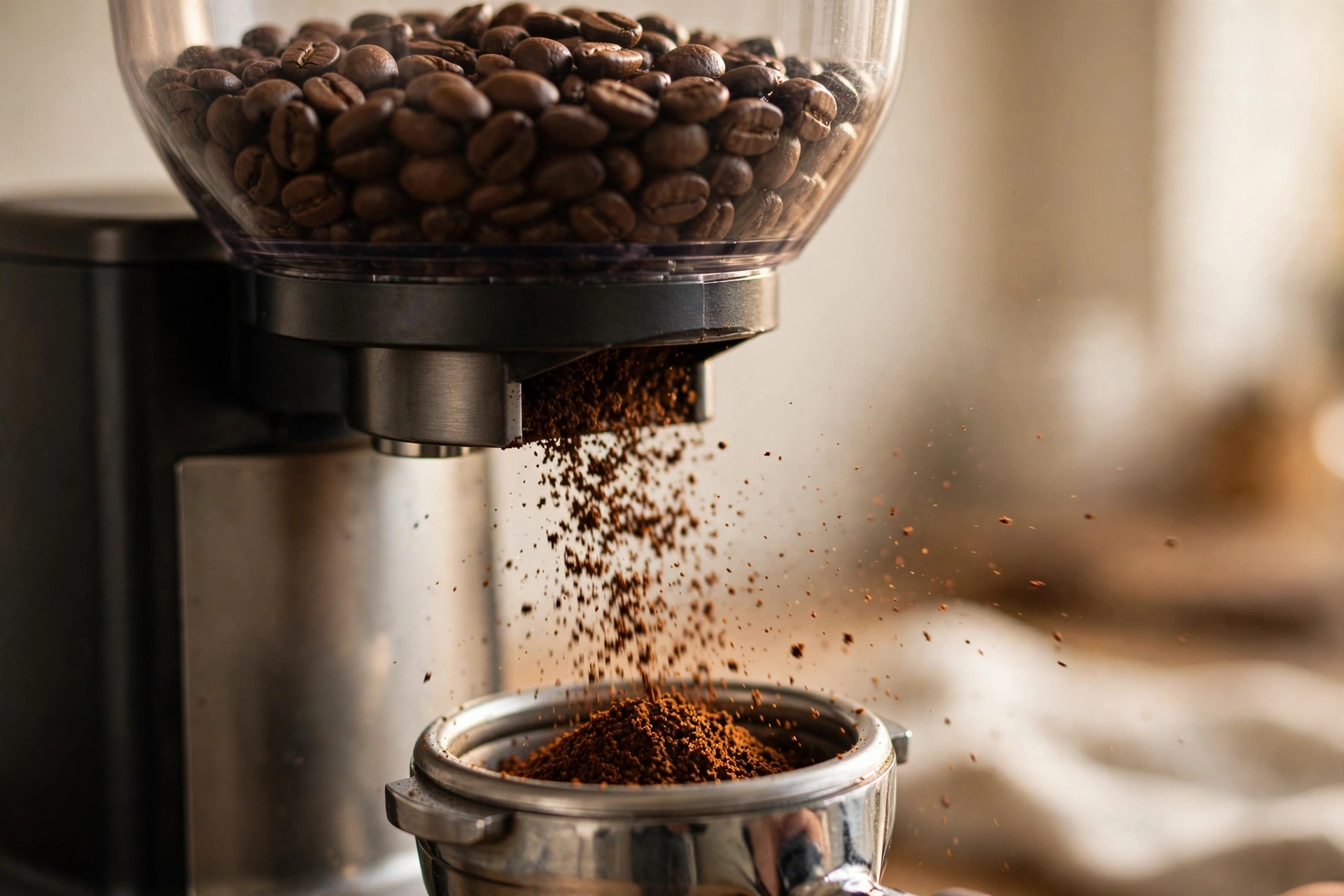
Why Espresso Needs a Grinder
Espresso needs coffee ground fresh, fine, and uniform: size sets flow, consistency stops channeling, freshness keeps flavor. Only a burr grinder does all three.
Beans & Brewing
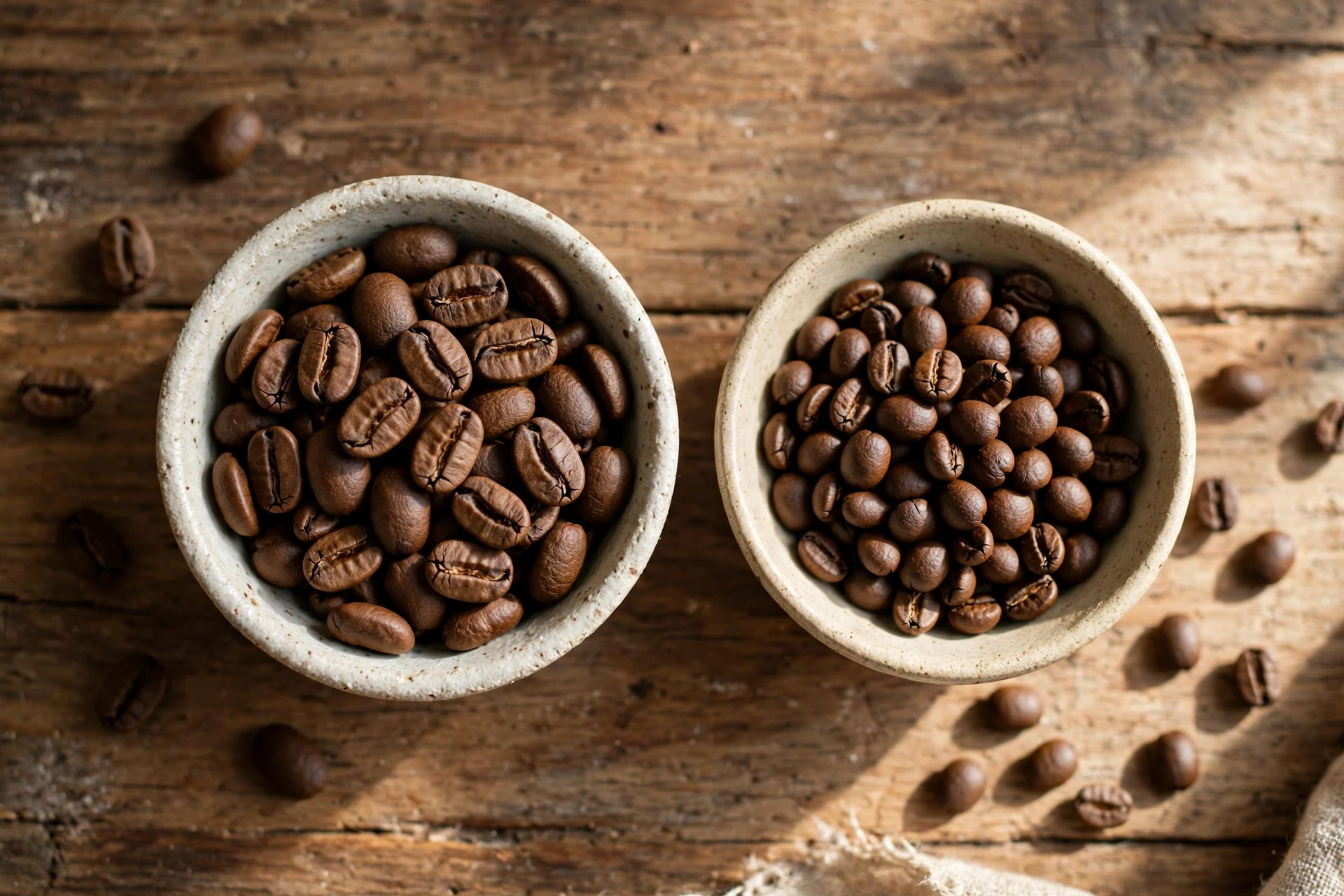
Arabica vs Robusta for Espresso
Arabica brings sweetness and acidity to espresso; robusta brings caffeine, crema, and body. Classic blends use both — your drinking habit decides the mix.
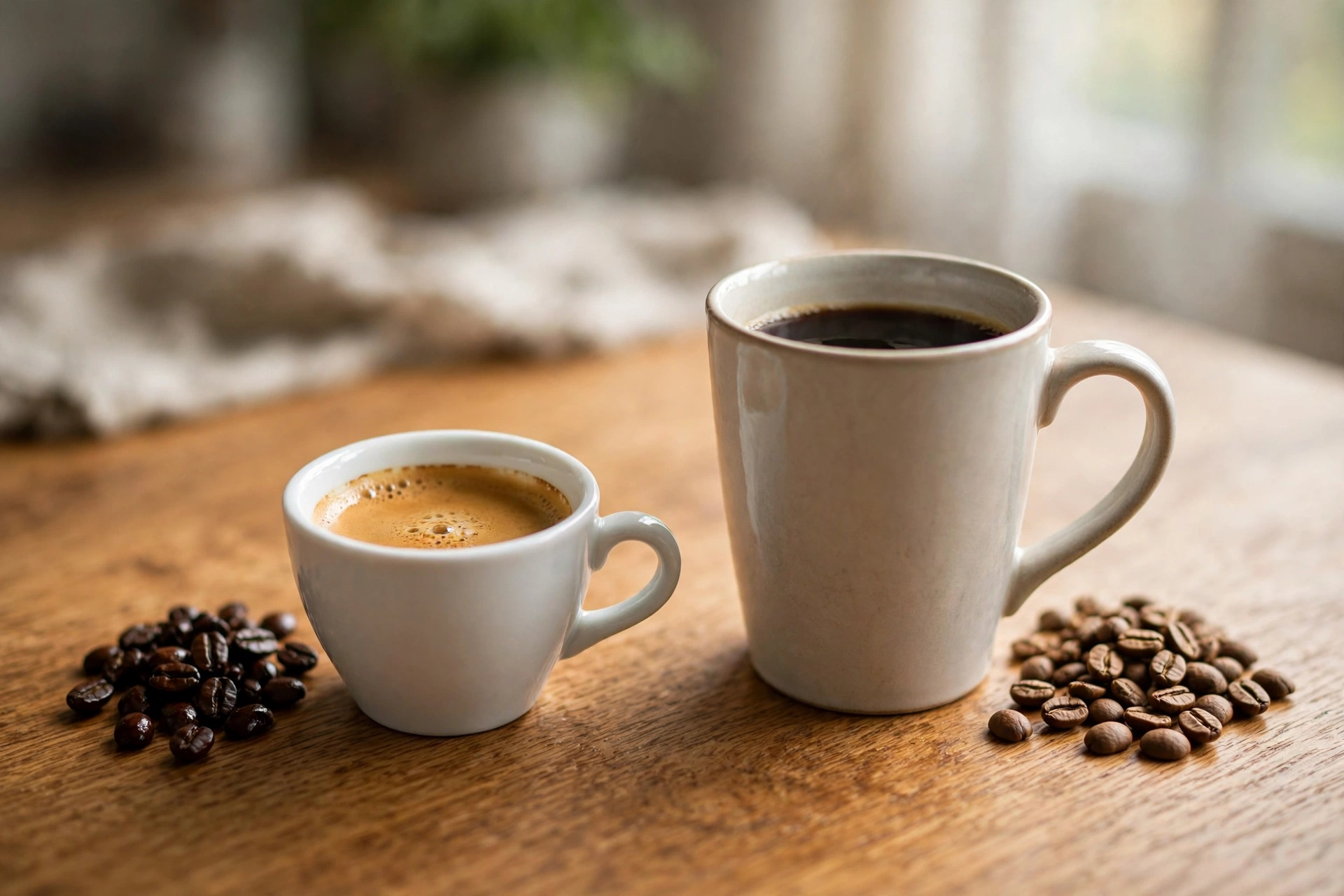
Espresso Beans vs Coffee Beans
'Espresso beans' are ordinary coffee beans, roasted and blended to survive 9-bar extraction. The label describes roast and intent — not a different plant.
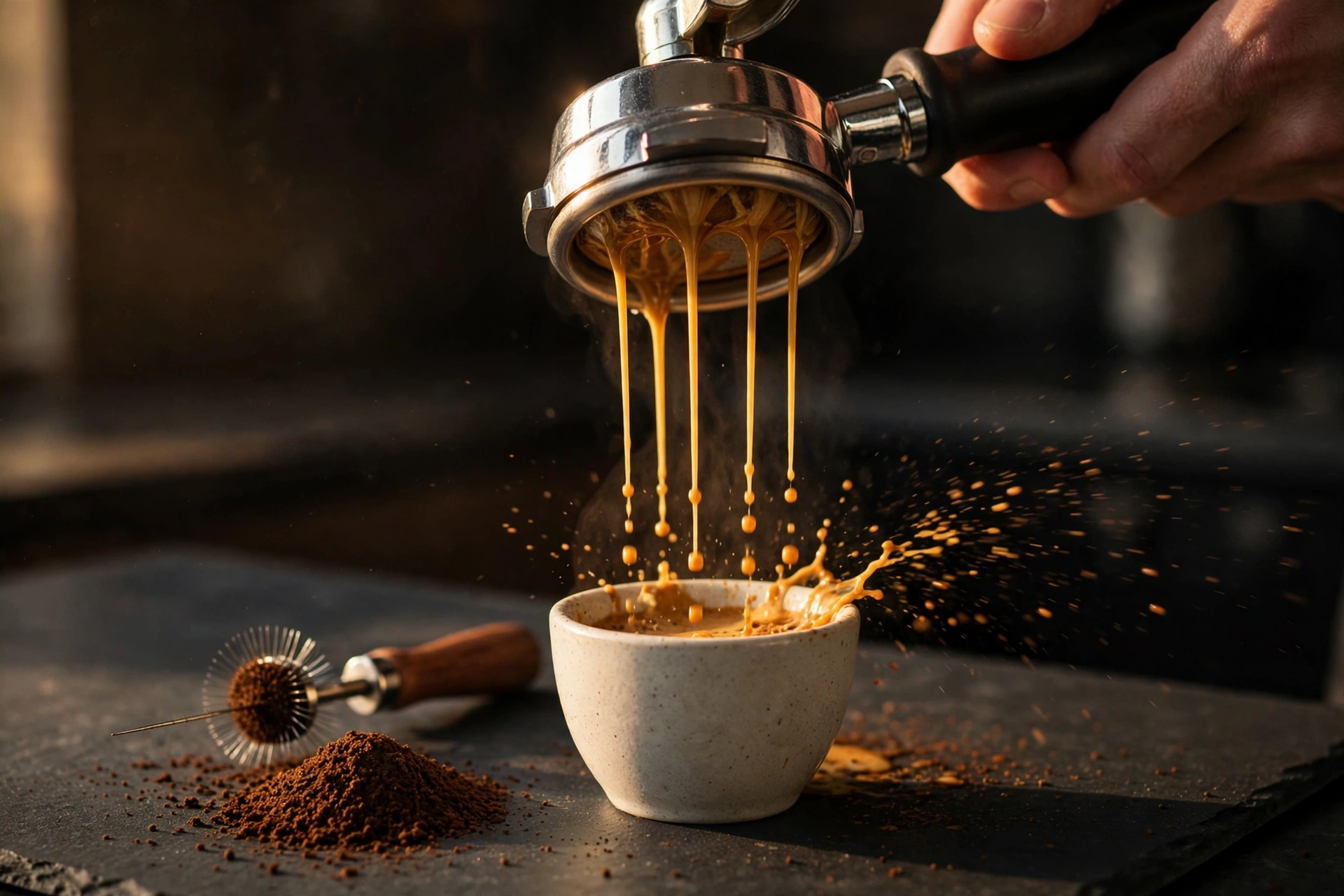
Espresso Channeling: How to Fix It
Channeling is water finding one weak path through the puck instead of flowing through all of it — fix it in order: break clumps with WDT, level the bed, tamp straight, then check dose, grind, and basket fit. One variable at a time.
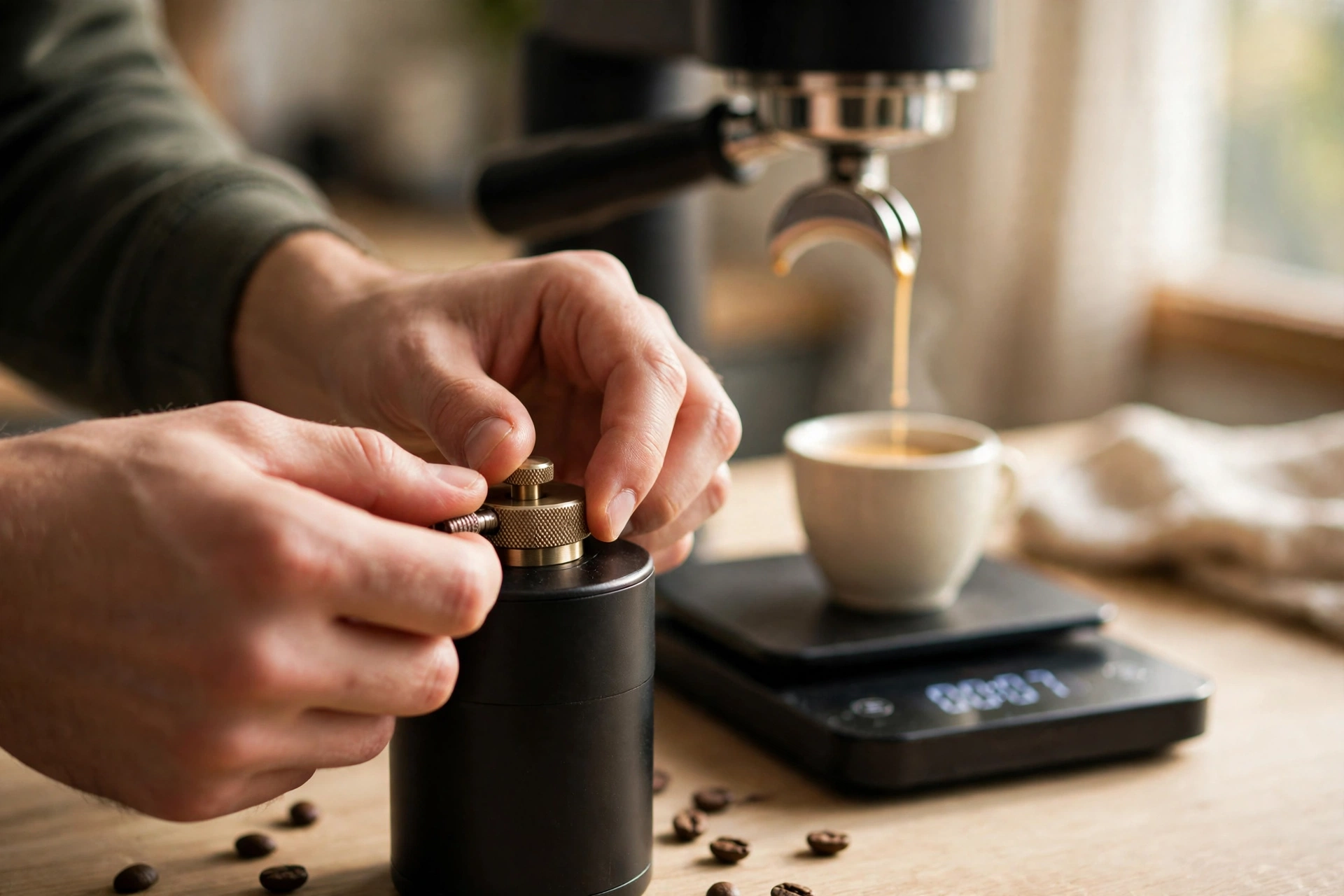
Espresso Extraction Too Fast: How to Slow It Down
A shot that finishes in under 20 seconds is under-extracted: water met too little resistance in the puck. Fix it in order — grind finer, check dose, fix distribution, then check bean freshness — one variable at a time.
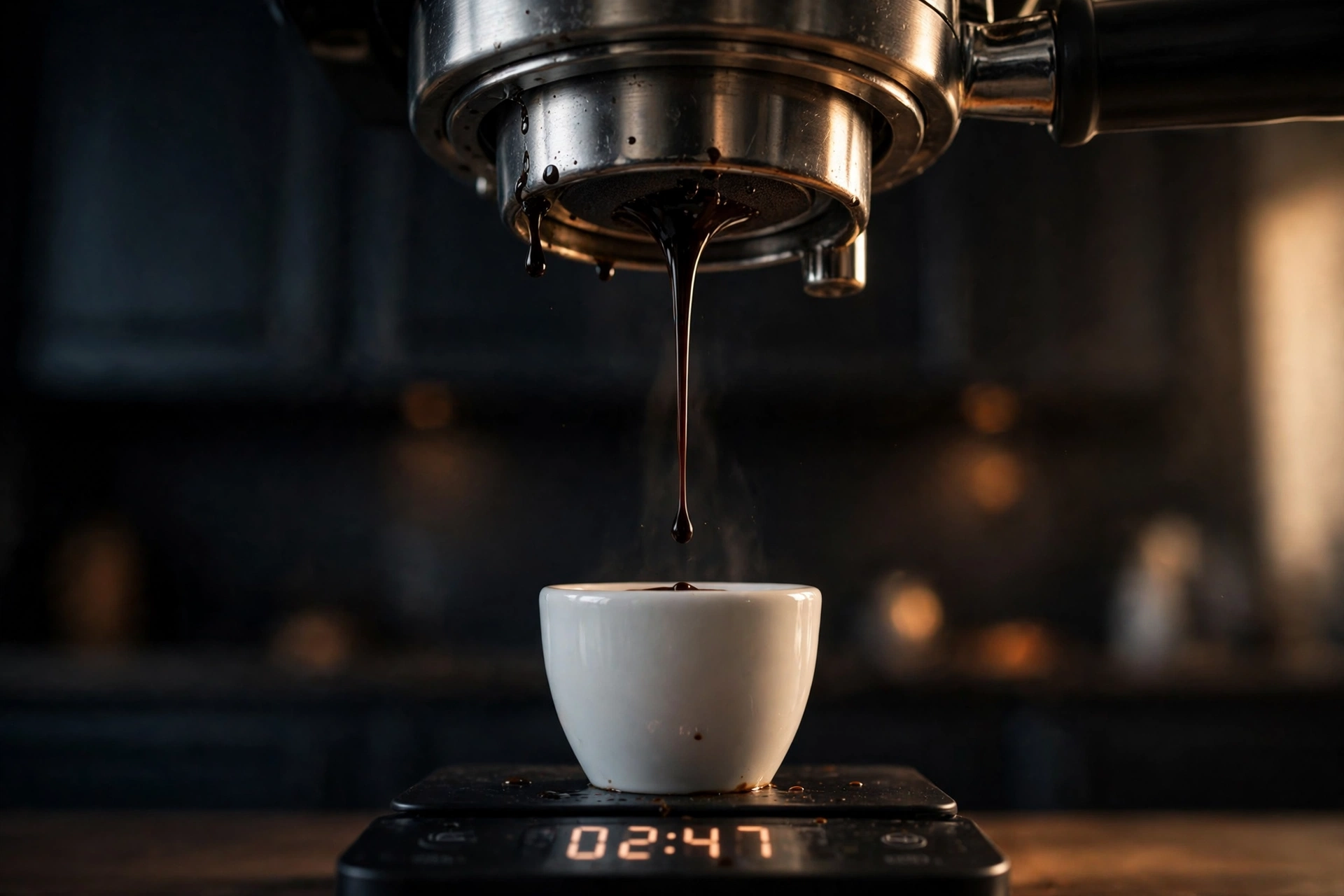
Espresso Extraction Too Slow: How to Speed It Up
A shot that drags past 40 seconds is over-extracted: water met too much resistance in the puck. Fix it in order — grind coarser, check dose, fix distribution, then check machine cleanliness — one variable at a time.
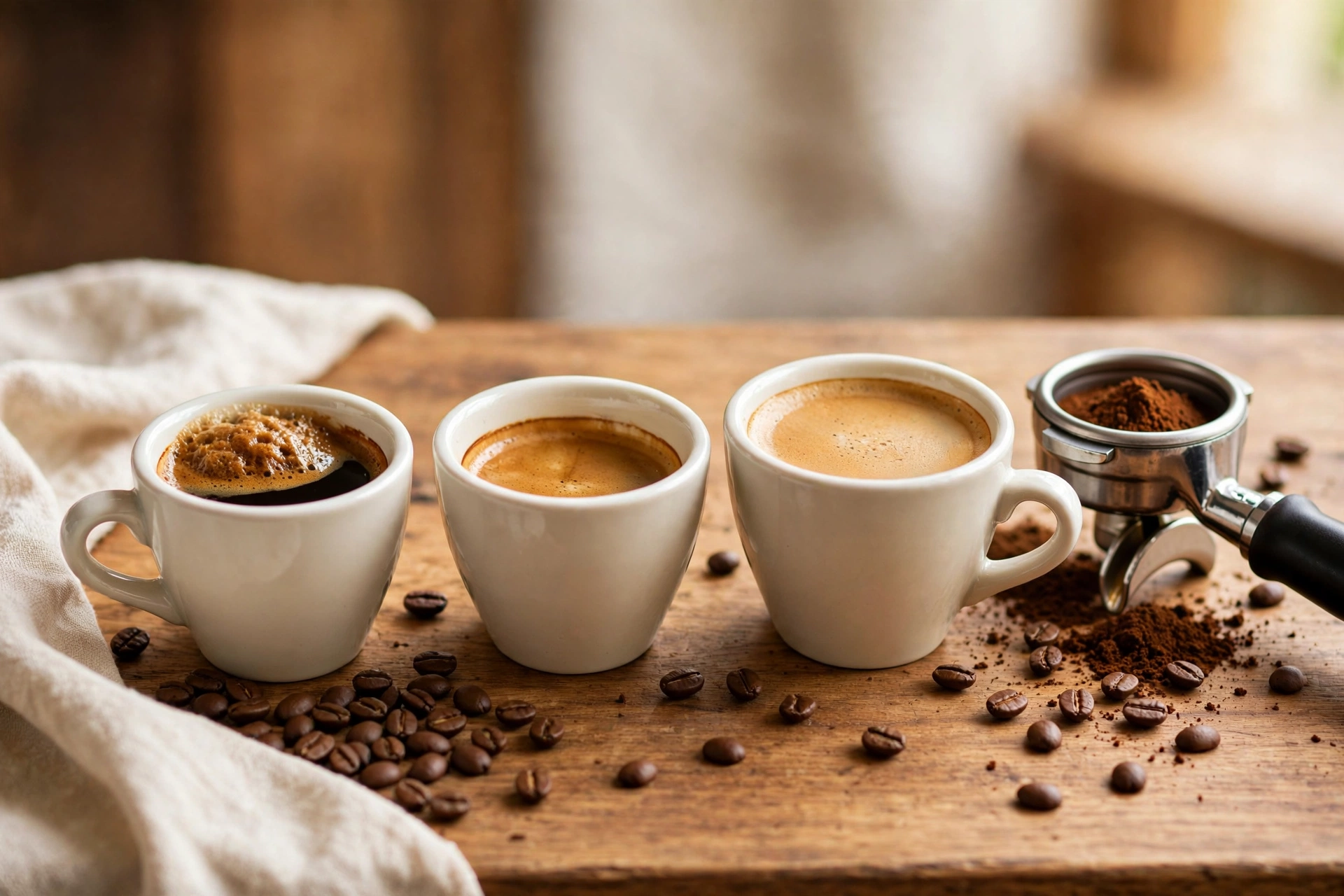
Espresso vs Lungo vs Ristretto
Ristretto, espresso, and lungo use the same dose at different yields—about 1:1–1:1.5, 1:2, and 1:3—changing concentration, sweetness, body, and bitterness.
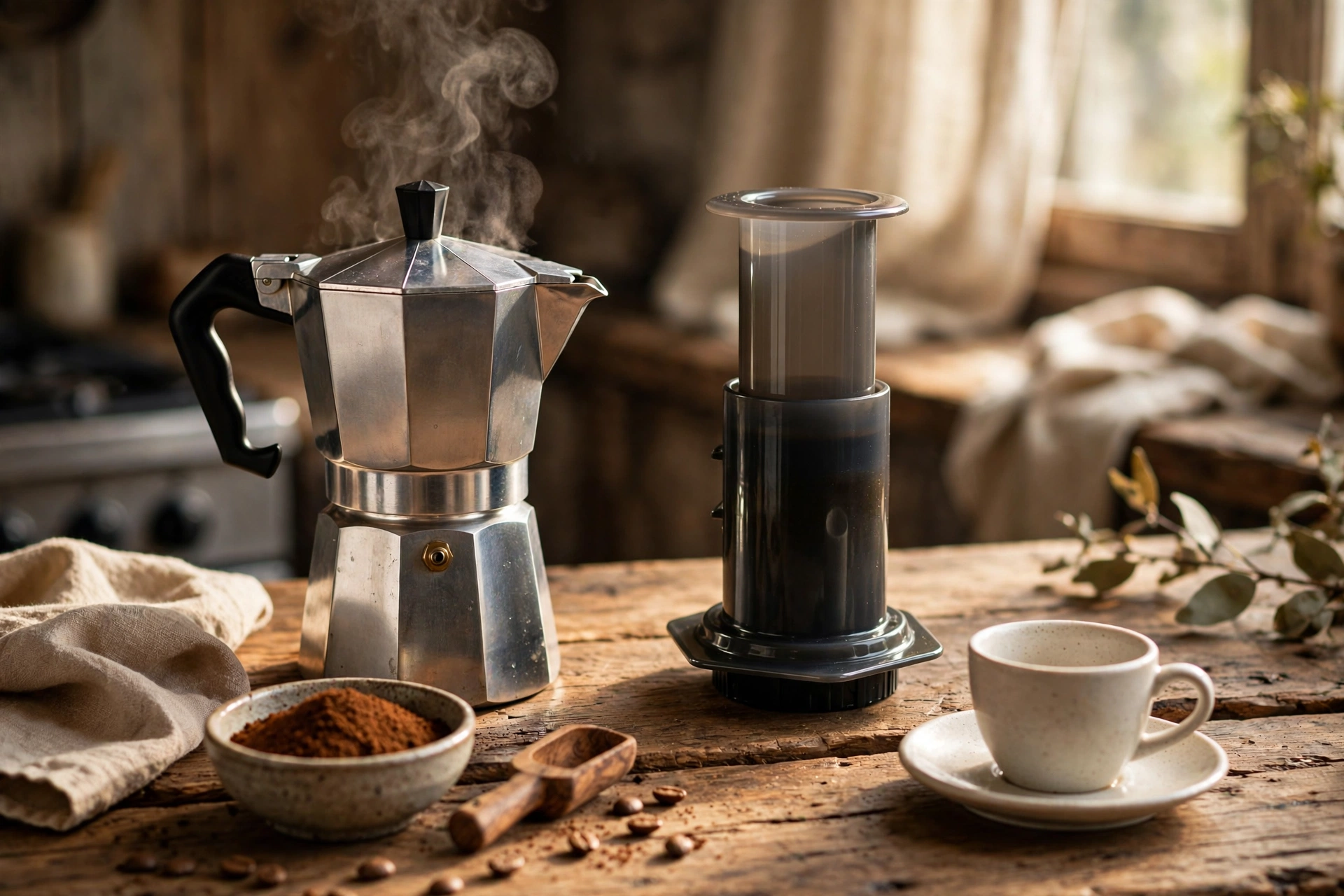
Making Espresso Without a Machine
No stovetop method makes true espresso — that takes ≈9 bars — but a Moka pot or AeroPress gets remarkably close. Here's the physics and how methods compare.
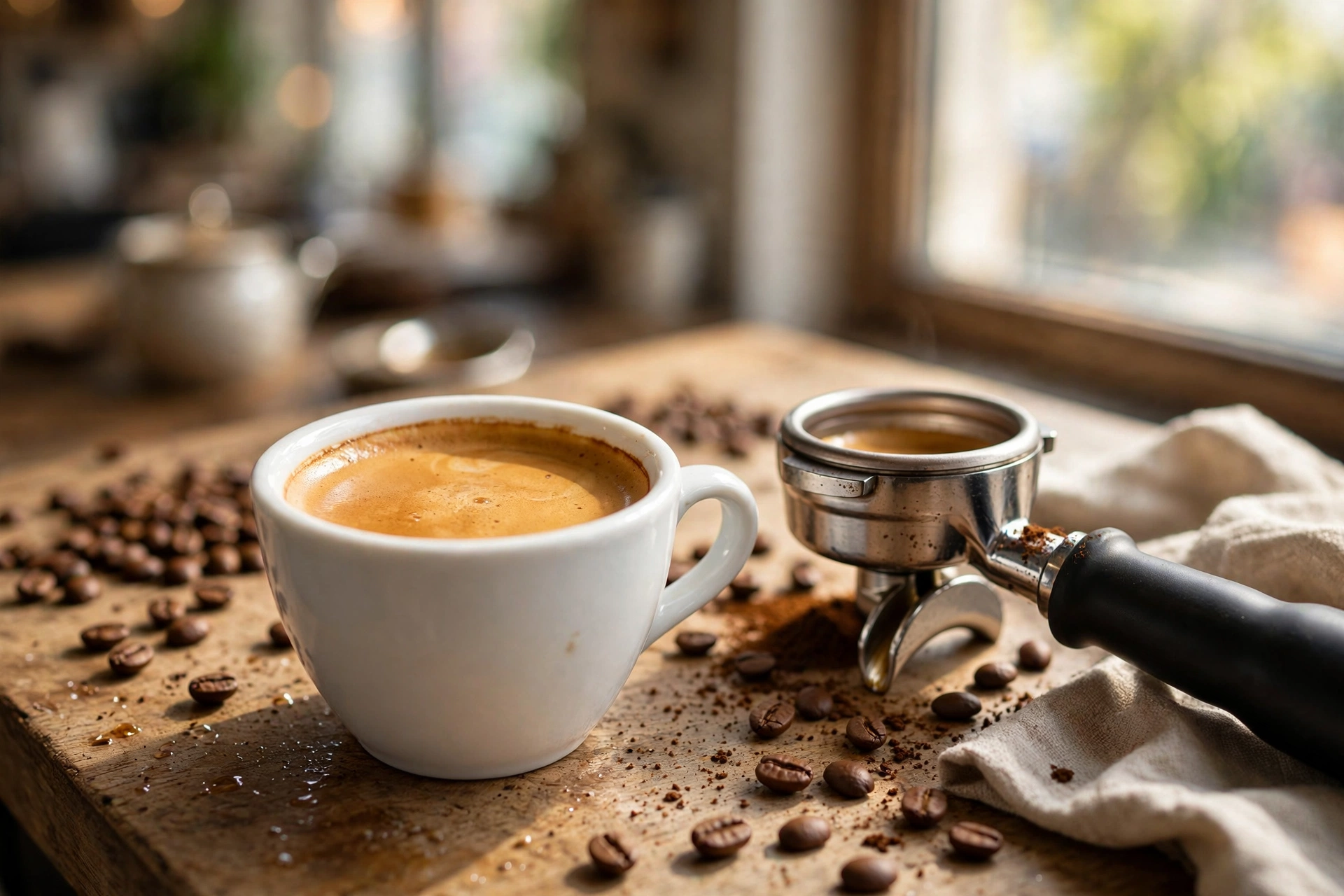
Caffeine in a Shot of Espresso
A single shot of espresso has about 63 mg of caffeine; a double has about 126 mg. Dose, bean species, and ratio explain why your shot may differ.
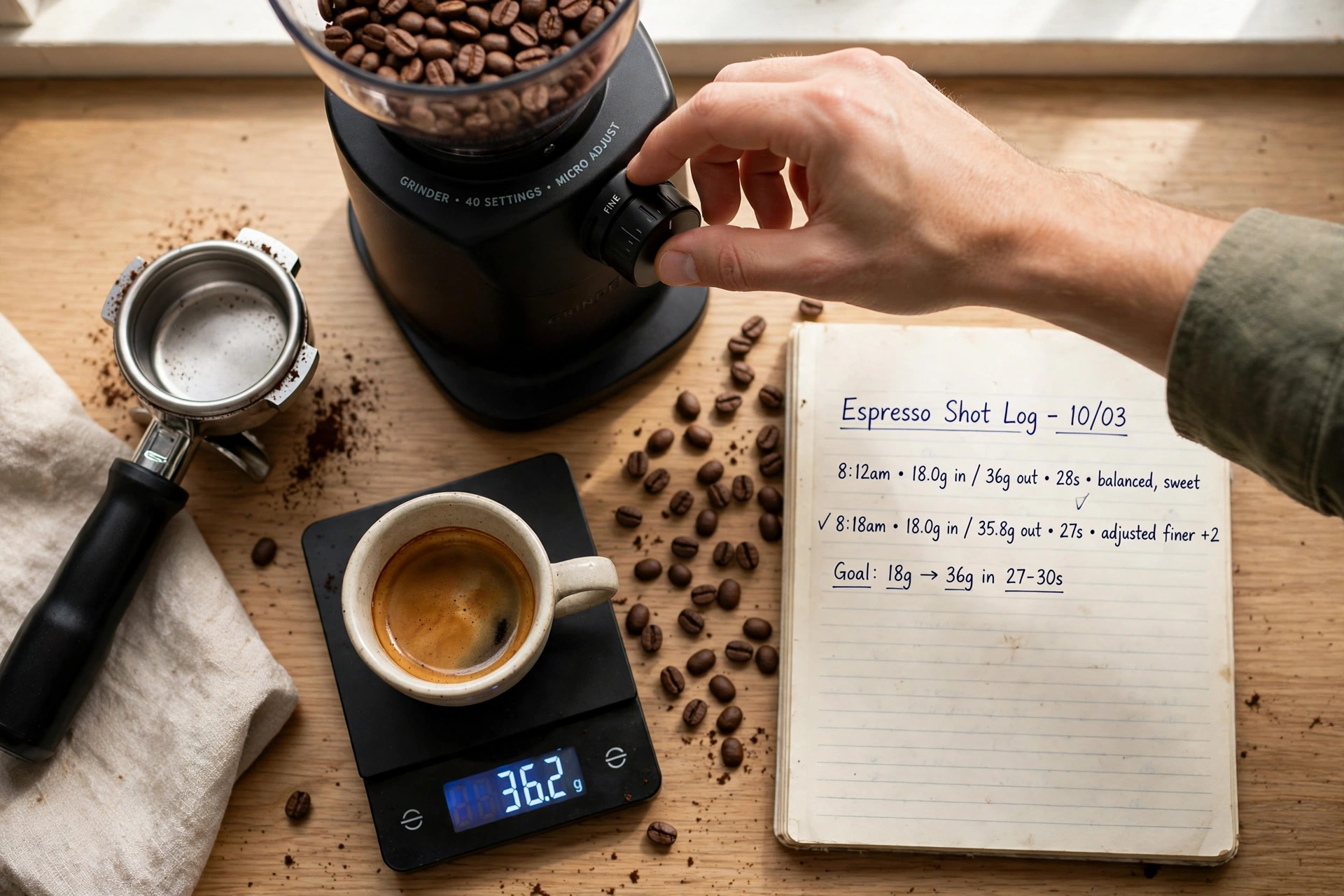
How to Dial In Espresso
Dialing in means fixing dose and yield, then moving grind until 18g in gives about 36g out in 25 to 30 seconds — then adjust by taste, one variable at a time.
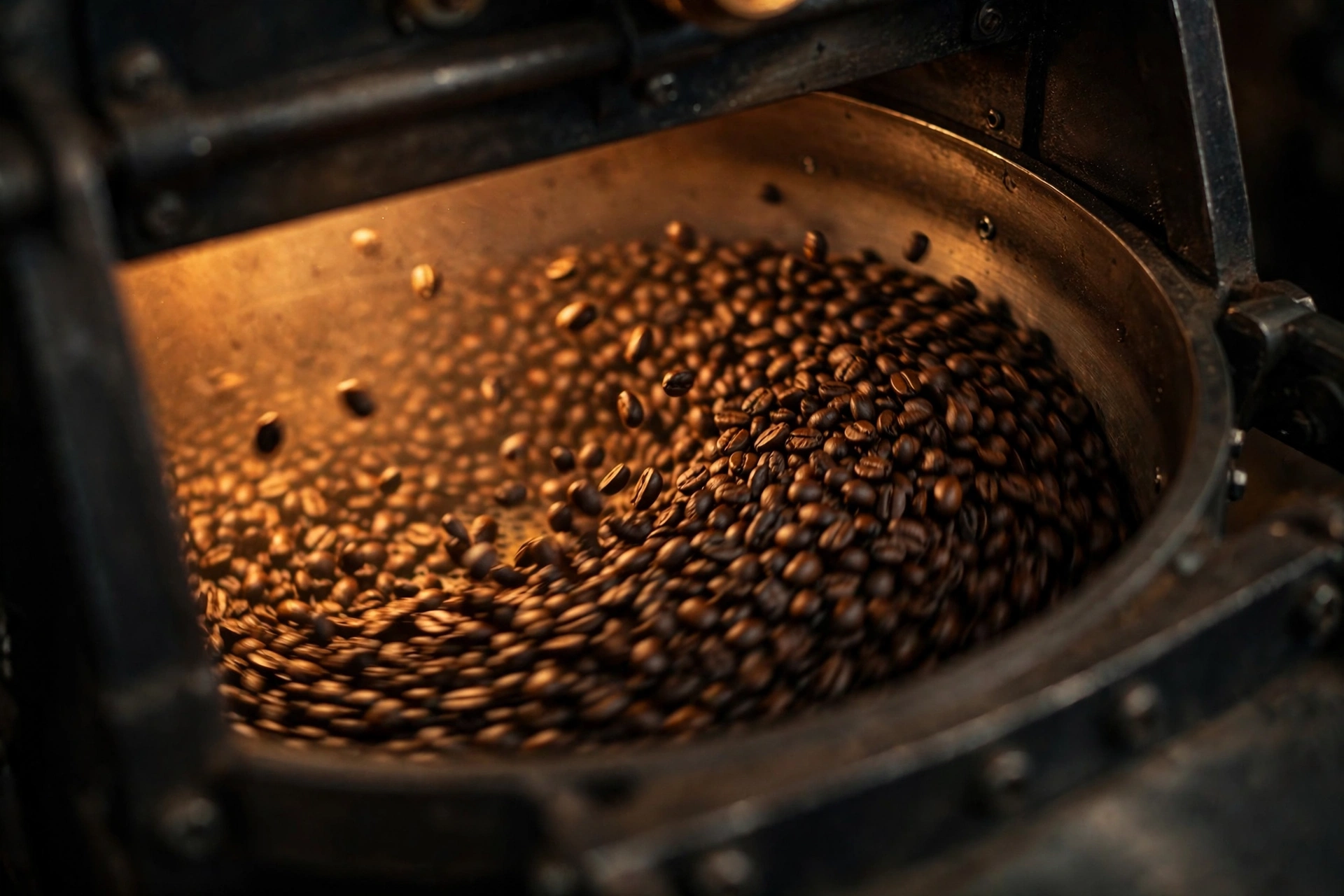
Light vs Dark Roast for Espresso
Dark roast is the easy espresso default — more soluble, lower acidity, heavier body. Light roast is brighter but needs finer grind, hotter water, longer shots.
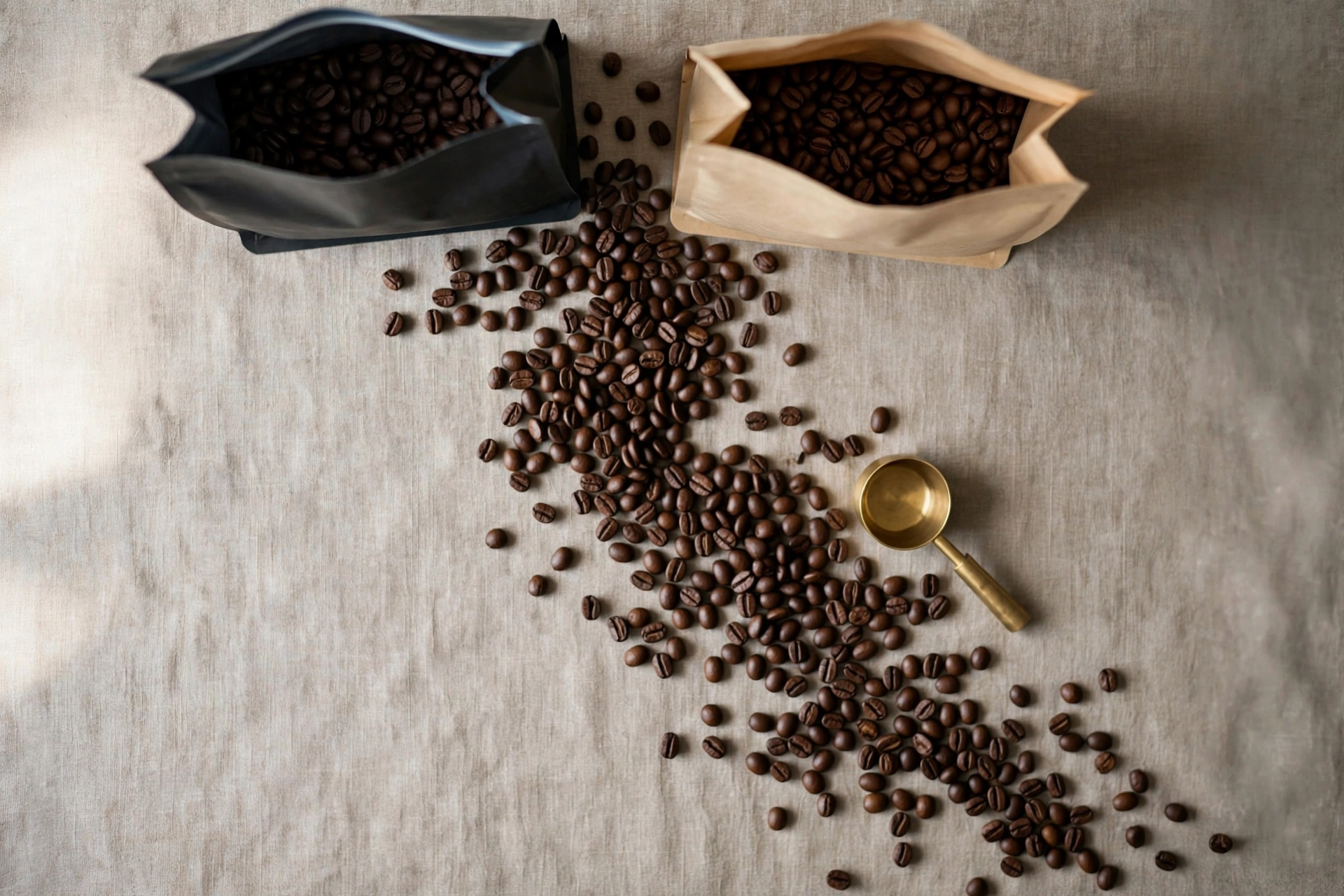
Single Origin vs Blend Espresso
Blends offer balance and easy dialling; single origins offer one farm's character but demand precision. The deciding factor is how you actually drink espresso.
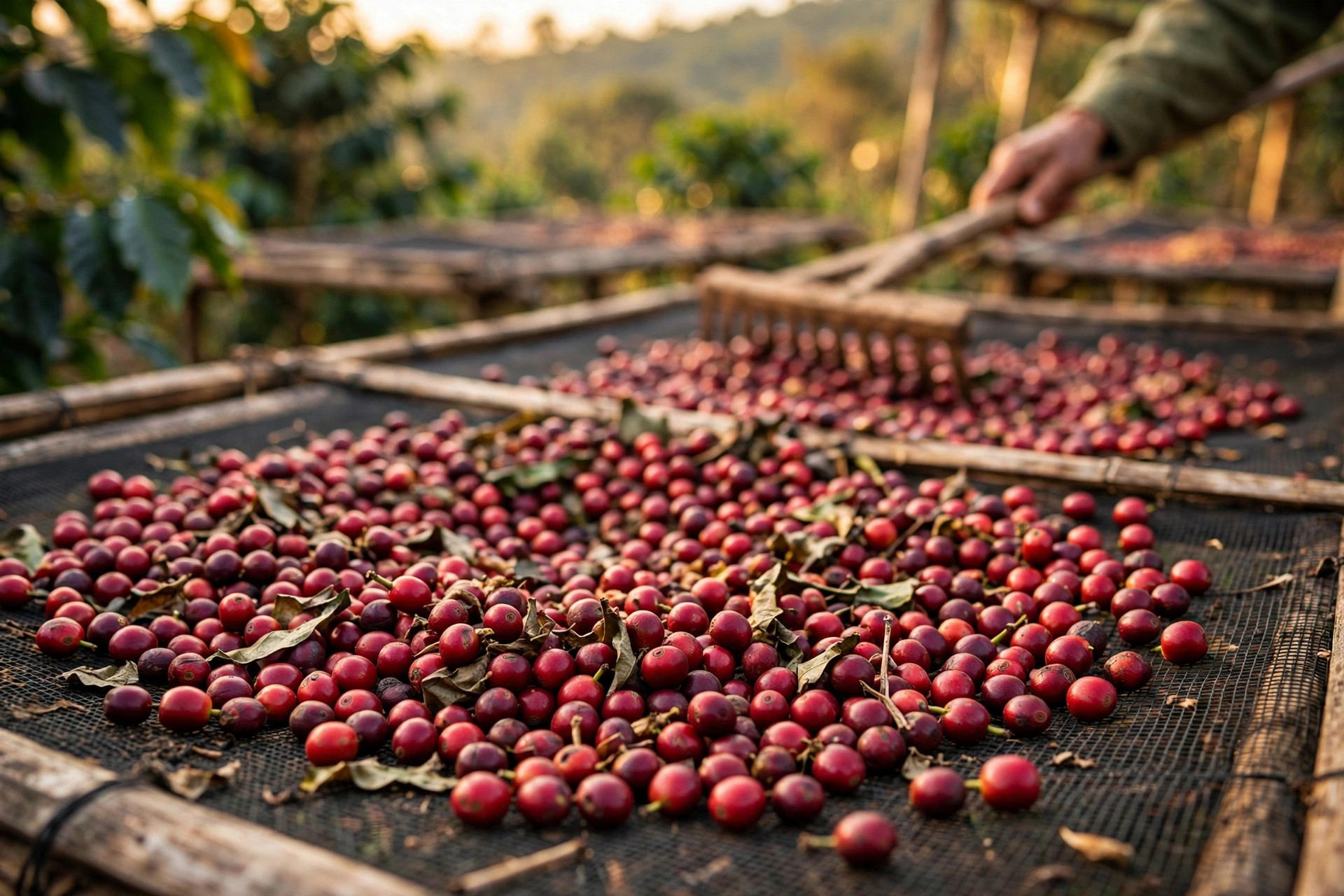
Washed vs Natural Coffee Process
Natural process dries the whole cherry for a sweeter, fruitier, heavier cup. Washed coffee is pulped before drying, so it tastes cleaner, brighter, lighter.
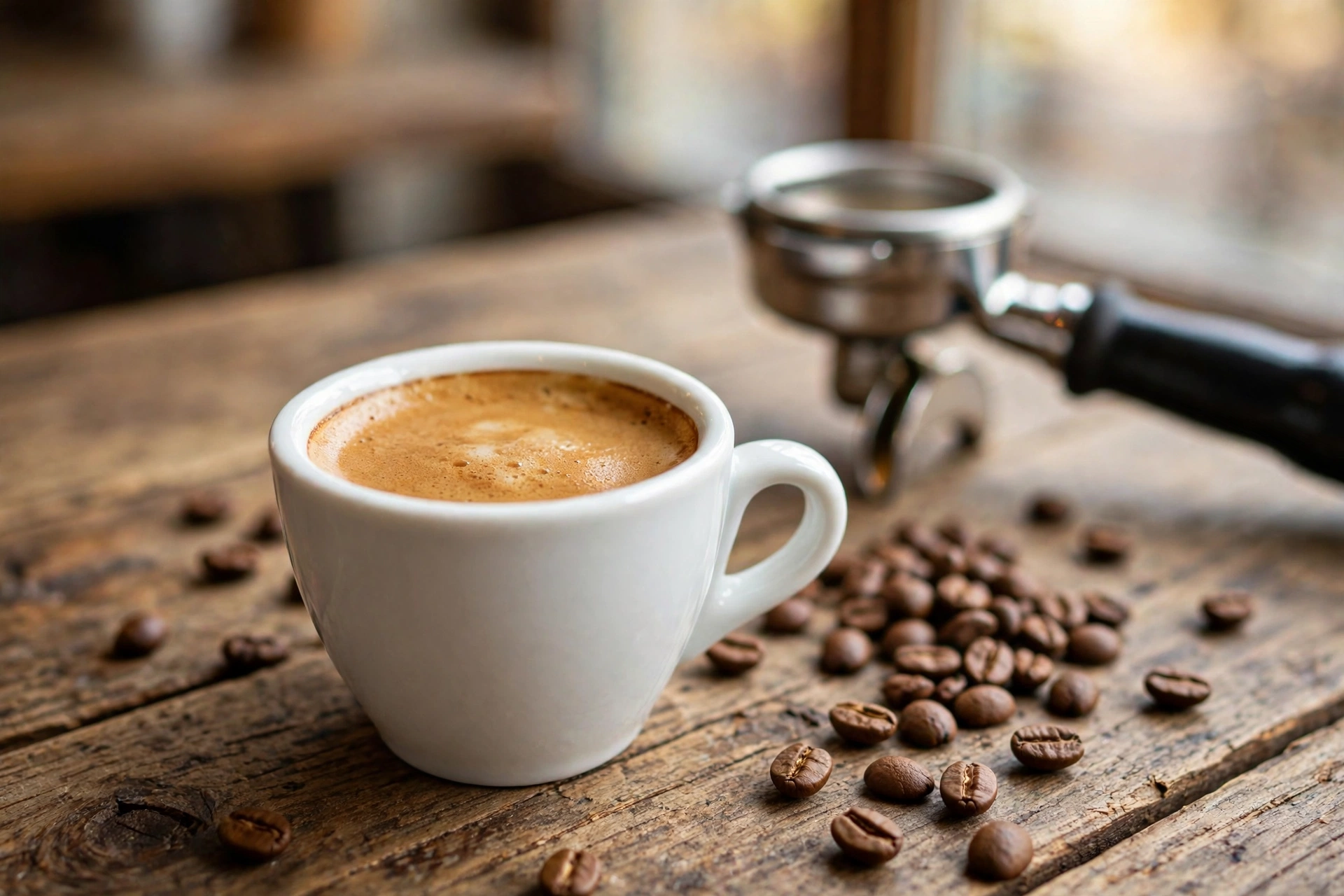
What Is Espresso, Really?
Espresso isn't a bean or a roast — it's a brewing method: ≈9 bars of pressure forcing hot water through fine coffee grounds, extracting a shot in 25–30 seconds.
Espresso Extraction Explained
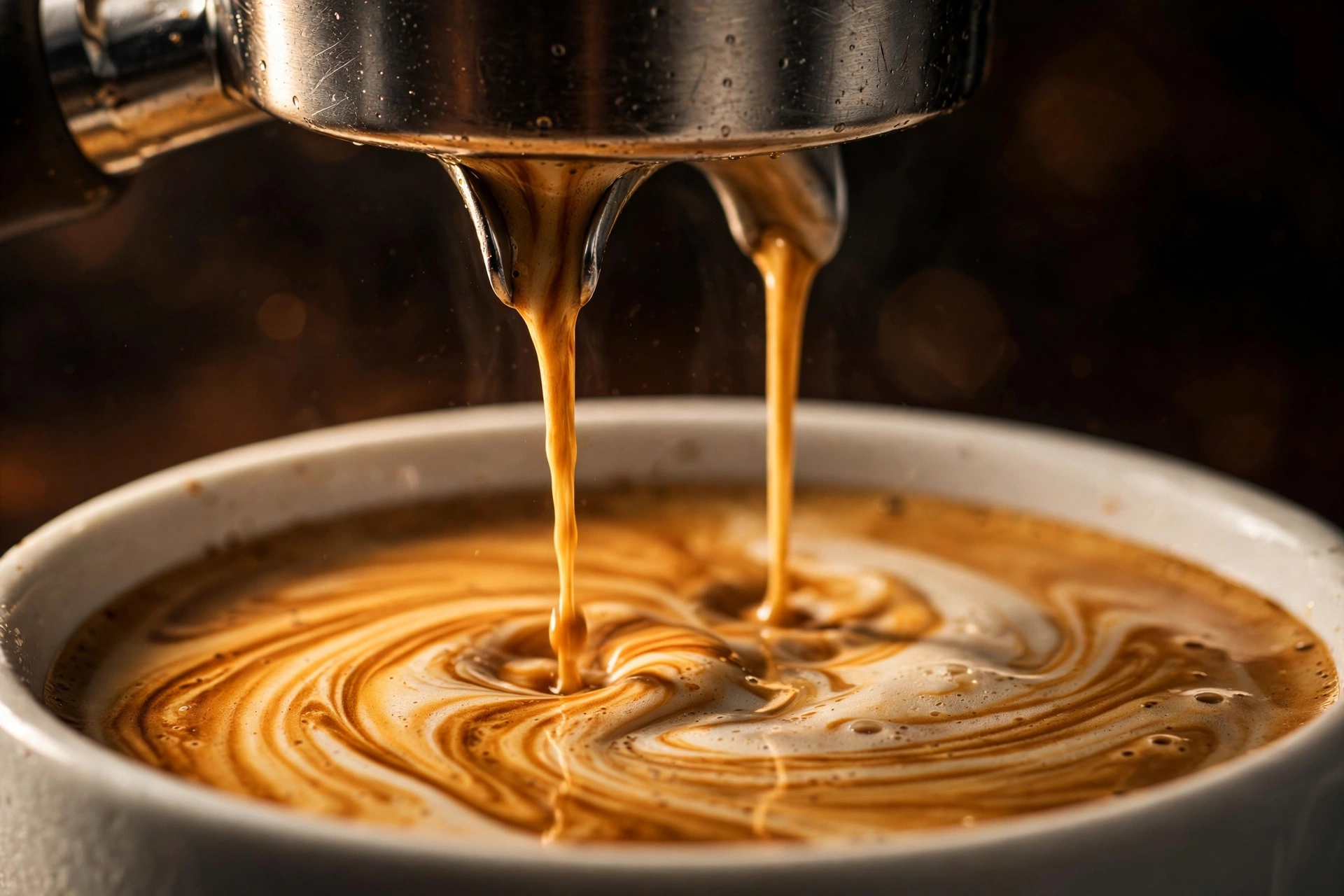
Extraction dissolves flavor compounds from the puck in sequence — acids, then sugars, then bitters. Good shots capture the first two and skip the third.
Whole Bean vs Pre-Ground Espresso
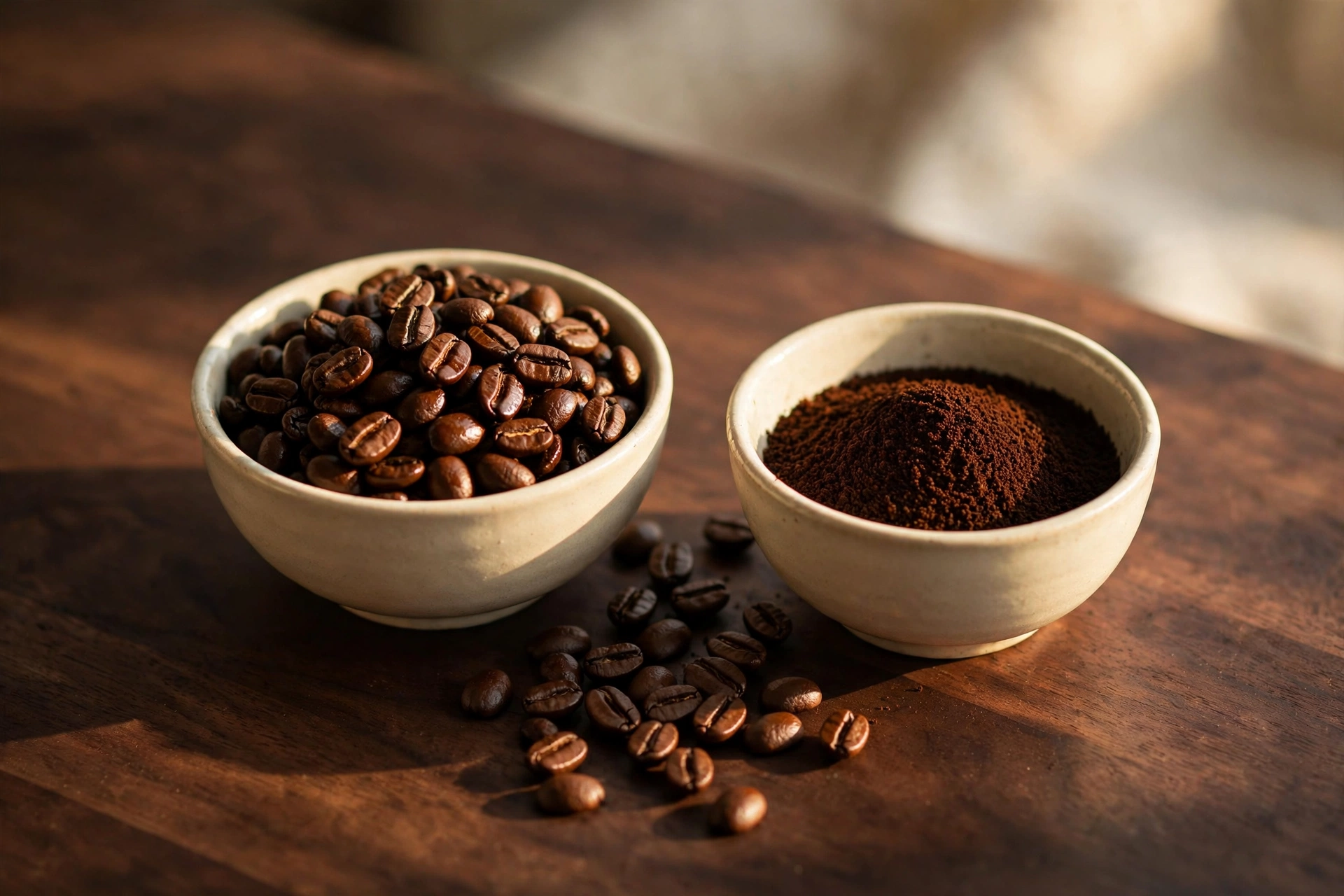
Grinding multiplies surface area, so ground coffee stales in minutes while whole beans last weeks. For espresso, grind timing matters more than bean origin.
Why Is My Espresso Bitter? Causes and Fixes
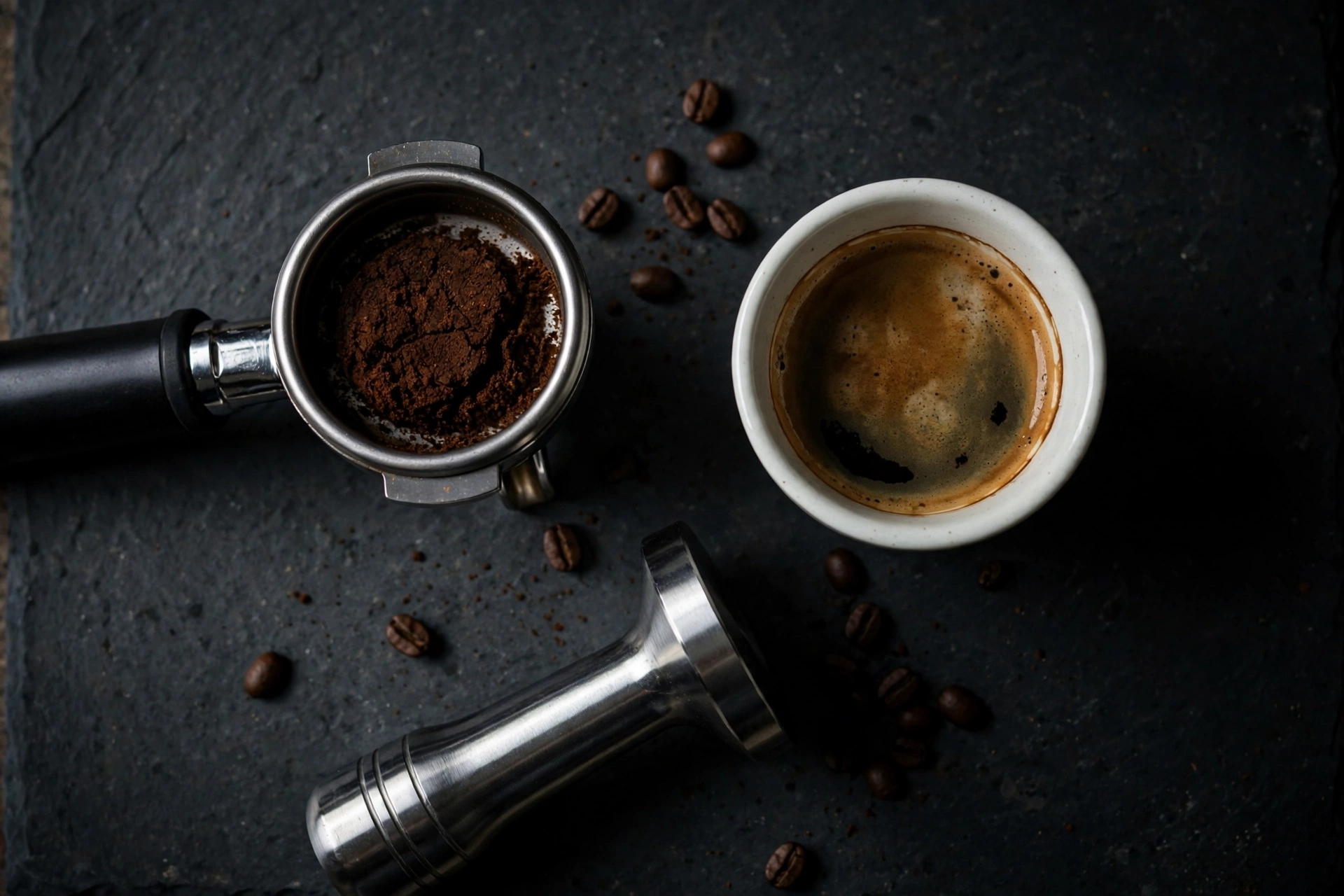
Bitter espresso is usually over-extraction — water pulling the late, harsh compounds out of the puck — but the roast and a dirty machine can taste identical. Check beans, then machine, then grind, one variable at a time.
Why Is My Espresso Sour? Causes and Fixes
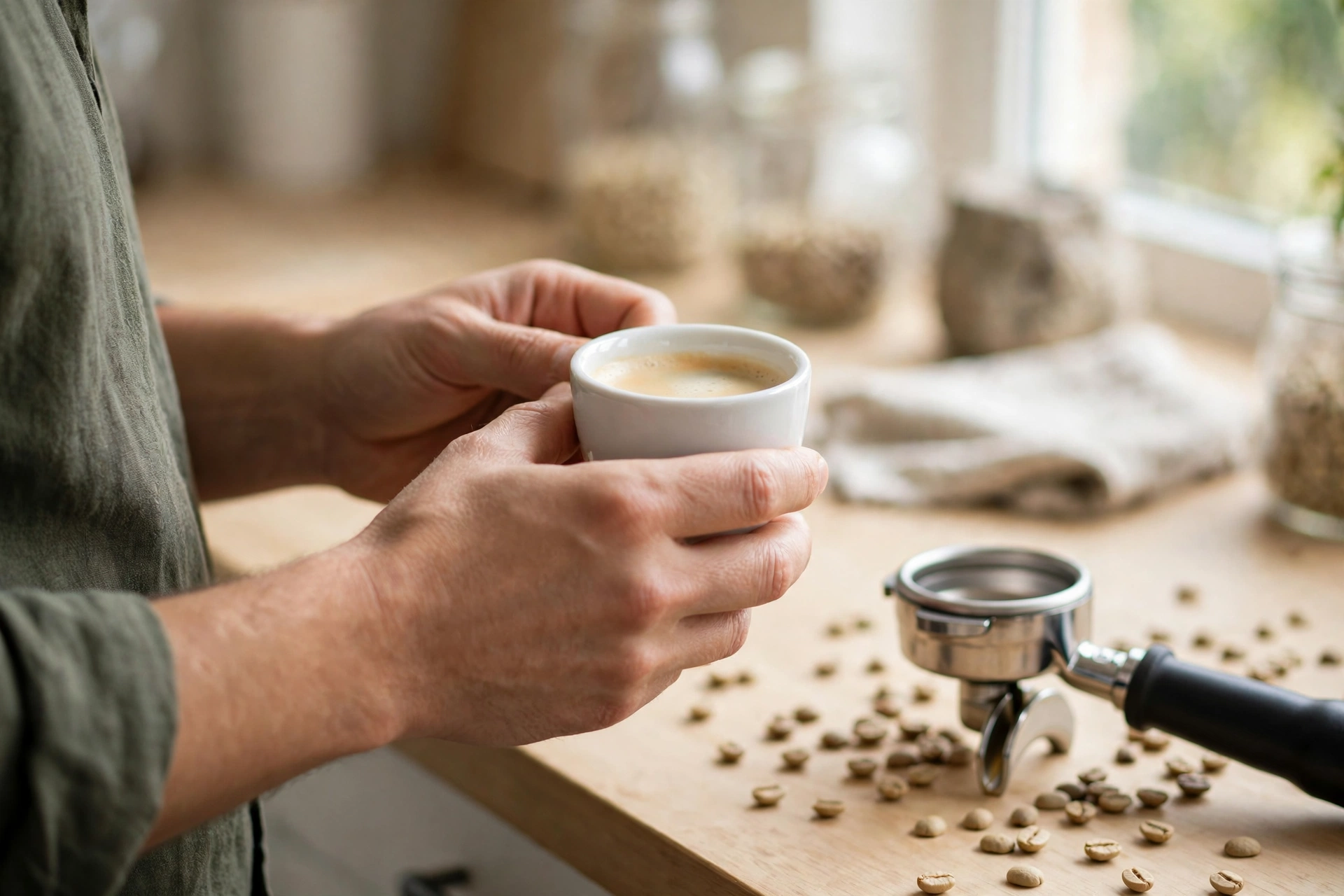
Sour espresso is almost always under-extraction — water leaving the puck after the acids and before the sugars. Grind finer first, then check ratio, temperature, and the beans, one variable at a time.