
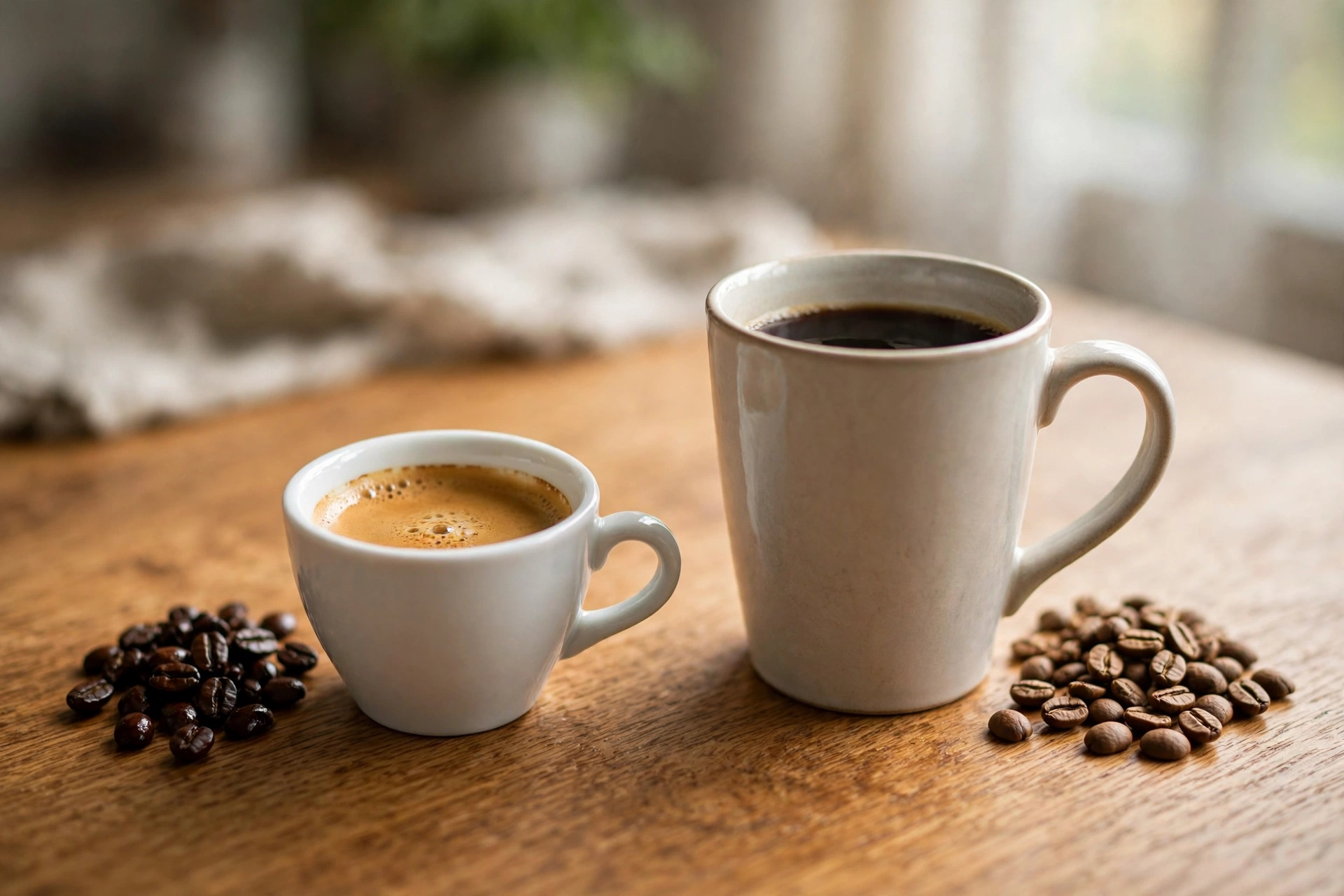
The short answer: there is no such thing as an espresso bean. Every bag labelled “espresso roast” or “espresso blend” contains ordinary coffee beans — the same species that become drip coffee, pour-over, or French press. Espresso is a brewing method; “espresso beans” is a roaster’s promise that this particular coffee was roasted, blended, or selected to taste good when forced through with 9 bars of pressure in about 25–30 seconds. The label changes what you should expect, not what the bean is.
We are a research desk, not a test lab: we synthesize roaster specifications, published measurements, and owner reports rather than claiming hands-on testing we have not done. Facts checked 2026-10-17 against current coffee reference sources.
First principles: why the label exists at all
Every coffee follows the same chain: species → processing → roast → grind → brew. The species decides the raw material’s potential (caffeine, acids, sugars); the roast decides solubility and which flavours survive brewing; the grind and brew method decide what actually gets extracted. An “espresso” label sits almost entirely in the roast-and-intent part of that chain.
The mechanism that matters is extraction physics. An espresso shot runs hot water through a fine puck for roughly 25–30 seconds — a very short, very violent extraction. Only highly soluble compounds make it into the cup in that window. Darker, more developed roasts are more soluble: prolonged roasting breaks down the bean’s cell structure and converts acids and sugars into Maillard compounds that dissolve readily. That is the real reason espresso roasts trend darker — not tradition or branding, but solubility. A coffee that would taste thin and sour at a light roast can taste rich and balanced once developed enough to give up its flavours in 30 seconds.
This is also why “espresso” is a suggestion, not a law. A skilled brewer can pull a great light-roast espresso — it just needs hotter water, a finer grind, and careful dialling in, because underdeveloped coffee is less forgiving at pressure. And an espresso blend brewed as drip is perfectly drinkable — just bolder and heavier than a filter roast. Our light vs dark roast guide walks through what roast development actually changes.
What “espresso” on the bag usually signals
Roasters use the label to tell you the coffee was built for pressure brewing. In practice it tends to mean:
- More developed roast. Medium-dark to dark, with more caramelized sugars and lower perceived acidity — flavours that hold up in a concentrated shot and under milk. (Read the roast-level details in our light vs dark roast guide.)
- Blended for body and crema. Espresso blends are composed the way our single origin vs blend guide describes: components chosen for sweetness, body, and balance rather than one origin’s expression. Some include a portion of robusta for its thick, long-lasting crema and extra caffeine — the classic Italian profile — while modern 100% arabica blends prioritize sweetness and nuance.
- Tuned for milk. The chocolate-caramel, low-acid profile that defines most espresso blends is exactly the profile that survives steamed milk, which is why our latte beans roundup skews toward these blends.
- Nothing about caffeine. The species decides caffeine, not the label — see the FAQ above.
Side by side:
| Aspect | Beans labelled “espresso” | Beans not labelled “espresso” |
|---|---|---|
| Different species or plant? | No — usually arabica or robusta | No — same species |
| Typical roast | Medium-dark to dark | Light to dark (any) |
| Blend construction | Often built for body, balance, crema | Varies; often single origin |
| Intended grind | Fine (for pressure) — but grind to your method | Ground to your method |
| Flavour tendency | Chocolatey, caramelized, full-bodied, low acidity | Varies: fruity and bright to bold |
| Best use | Shots and milk drinks | Any brew method |
| Cross-compatibility | Works as drip, tastes bolder | Works as espresso, may need careful dialling |
The two swaps everyone asks about
Espresso beans in a drip machine. Yes, and they are often excellent there. Grind medium for drip, and expect a heavier, more caramelized cup than a light filter roast — less brightness, more body. In delicate brewers like pour-over, some espresso blends taste a little muted, but in an automatic drip machine they are reliably good.
Regular coffee in an espresso machine. Also yes. Espresso is the machine, not the bean. Any coffee, ground fine and dosed properly, becomes espresso when brewed under pressure. The watch-out is brightness: light-roast coffees carry more perceived acidity, and pressure brewing magnifies it, so a light filter roast pulled as espresso can taste sharp. Start with a medium roast if you are experimenting, and adjust the grind in small steps using our dialling-in guide.
The broader point: the grind sets the method more than the bag does. Fine grind plus pressure equals espresso; medium grind plus gravity equals drip. The label on the bag is guidance about which coffees the roaster thinks will taste best under pressure — not permission you need.
What to actually buy
Match the bag to the brewer, not the other way round:
- Own an espresso machine? Buy coffee roasted or blended for espresso — that is what the label is for. Our dark roast beans roundup and latte beans roundup name options selected for pressure brewing, and the decaf roundup covers decaf drinkers.
- Brew drip, pour-over, or French press? Buy any roast you enjoy; filter roasts (light to medium) are roasted to preserve the origin character that slow brewing extracts well.
- Drink both? A versatile medium-roast blend is the single-bag answer — developed enough for a good shot, nuanced enough for drip. Or keep two bags and get each method at its best.
If you want the deeper background, our Coffee Beans hub covers the four commercial species (arabica, robusta, liberica, excelsa) with roast and flavour references, and our what is espresso guide explains the brewing method itself. Once you stop shopping for a special bean and start shopping for the right roast, the coffee aisle gets much simpler.