Liberica (Coffea liberica) is coffee’s rare third species: huge, irregular beans with a smoky, floral flavour found nowhere else in coffee. It makes up about 2% of world production — and if you’ve had the Philippines’ kapeng barako, you’ve had liberica.
What liberica is
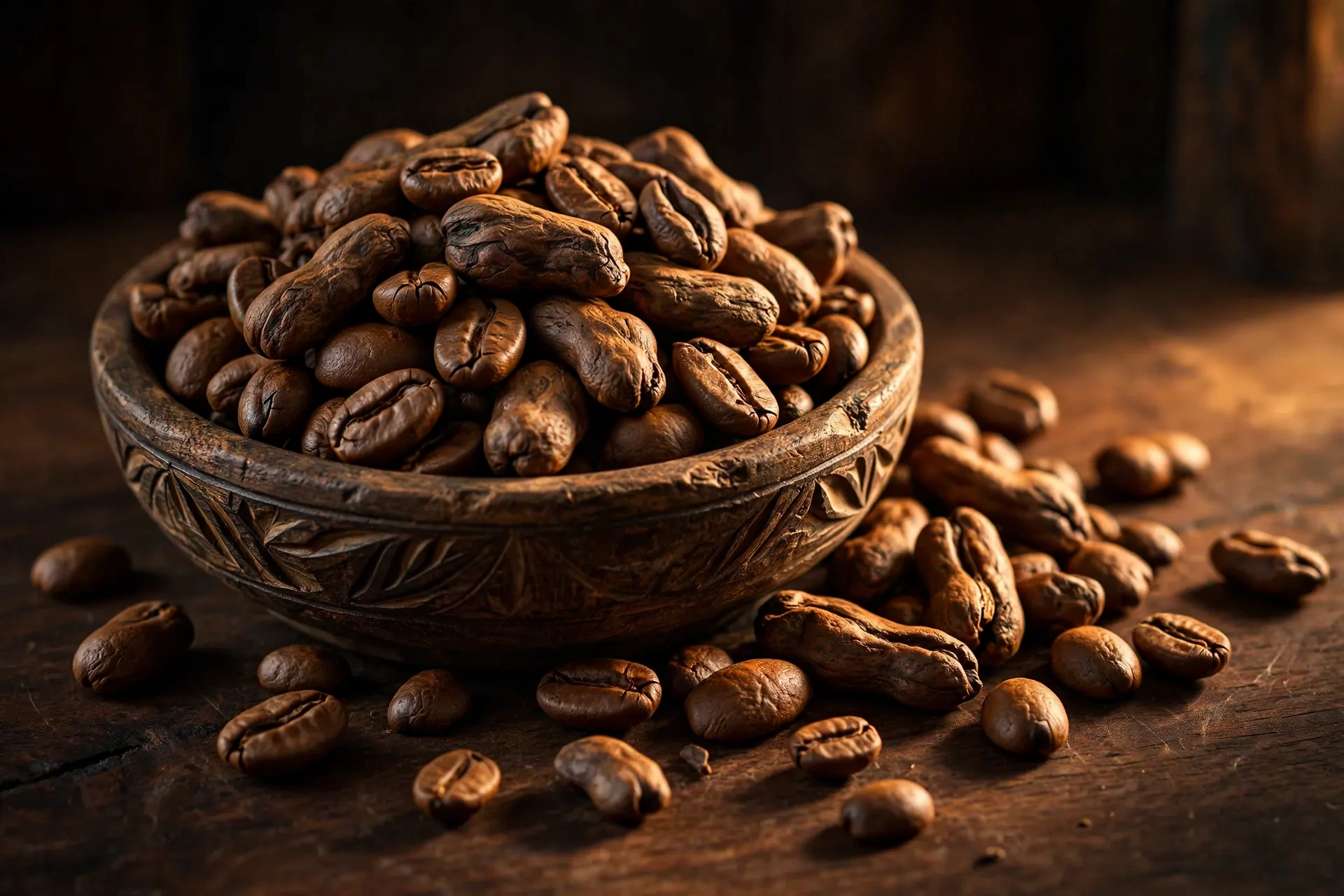
Liberica is a distinct coffee species native to West and Central Africa, named after Liberia. Everything about it is oversized: the tree grows far taller than arabica, the cherries are large, and the beans are the biggest in commercial coffee — irregular, asymmetrical, almost almond-like, with a distinctive off-centre crease. You can identify liberica on sight once you know the shape.
It nearly vanished from world trade in the late 19th century when coffee leaf rust devastated arabica plantations — liberica was planted as the resistant replacement, then abandoned when grafting and other controls saved arabica. It survived in the places that kept drinking it.
Where it grows
Today liberica is concentrated in the Philippines (Batangas and Cavite, as kapeng barako), Malaysia (where it’s a mainstream local coffee), and parts of Indonesia. It tolerates hot lowland conditions like robusta, growing where arabica can’t. The tiny global share isn’t about quality — it’s about history: the world standardised on arabica and robusta, and liberica stayed regional.
Taste profile
Smoky, woody, and floral, with dark fruit and occasionally a savoury, almost meaty edge. The aroma is the giveaway — pungent and perfumed in a way no arabica or robusta is. It’s genuinely polarising: some drinkers find it the most interesting coffee they’ve had; others find it strange. Neither reaction is wrong. The unusual notes come from the species’ own aromatic compounds, not from processing or roast.
Caffeine and body
Liberica runs 1.2-1.5% caffeine — arabica territory, not robusta’s. Its fearsome reputation (barako is famously “strong”) comes from how it’s traditionally brewed: very high coffee-to-water ratios and dark roasts, not bean chemistry. The body is full and the finish long.
Liberica in espresso
Honest answer: liberica is an experience, not an espresso staple. Its smoky-floral profile doesn’t play the role arabica or robusta play in blends, and virtually no commercial espresso blend includes it. If you’re curious, pull it as a straight shot at a conventional 1:2 ratio and taste it black — that’s the point, to meet the species on its own terms. Don’t judge your grinder or your technique by the result; judge the bean.
Buying liberica
Look to Filipino and Malaysian roasters and importers — that’s where the supply chain lives. Expect whole beans roasted dark by tradition; lighter roasts exist from specialty sellers and show more of the floral side. Freshness rules apply like any coffee: roast date within weeks, whole bean, airtight storage.