
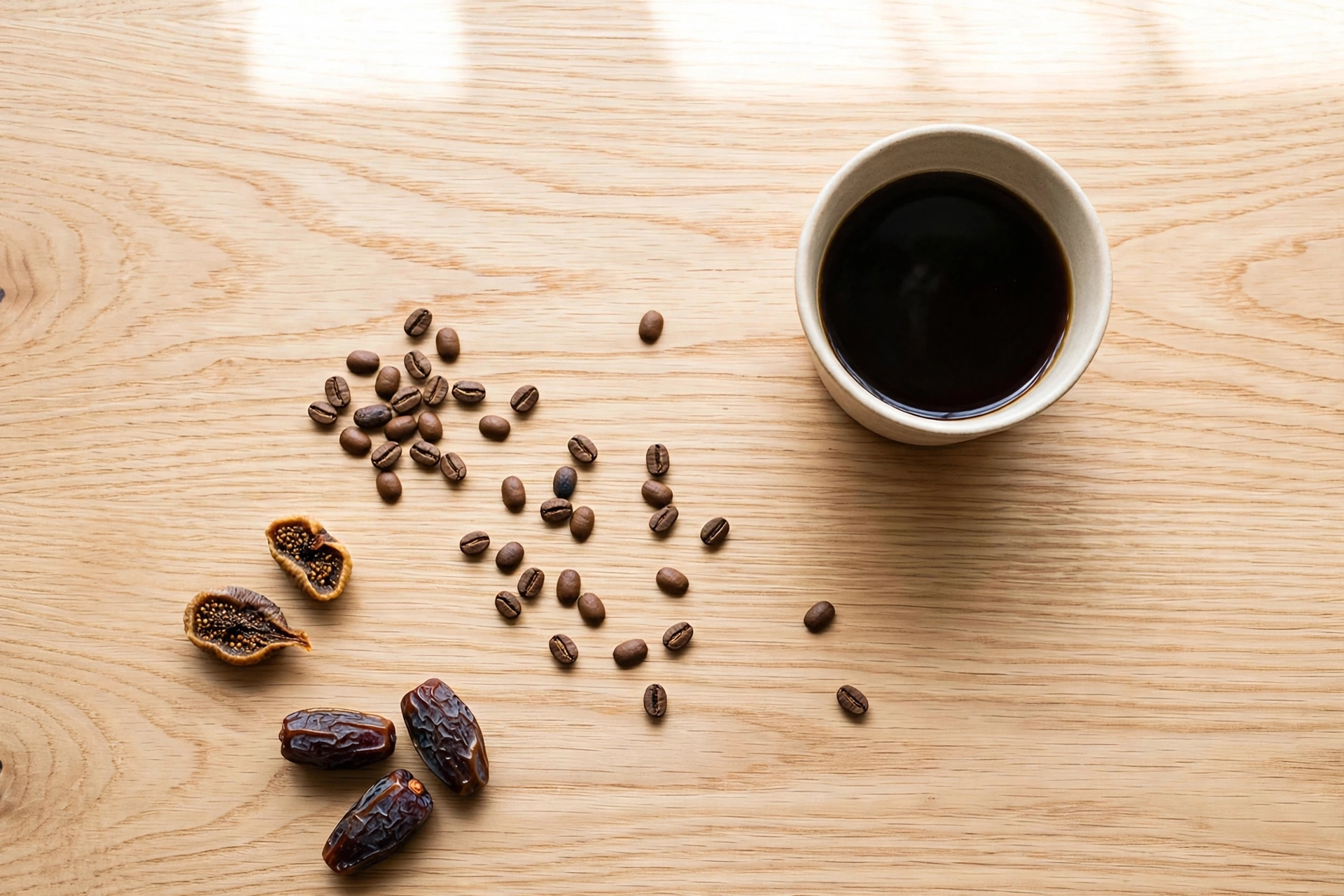
Excelsa is the blender’s secret ingredient: a rare liberica variety with a tart, fruity complexity that no other coffee bean provides. You probably won’t find it as a single origin at your local roaster — but you’ve likely tasted it hiding inside a blend.
What excelsa is
Excelsa was long treated as its own species (Coffea excelsa), discovered in Central Africa in the early 1900s. Botanists later reclassified it as a variety of liberica — Coffea liberica var. dewevrei — but the trade never got the memo: it’s still bought and sold as “excelsa.” The beans look the part of the liberica family — medium, almond-shaped, with the characteristic asymmetrical crease.
It grows in hot lowland conditions like its liberica parent, concentrated in Vietnam and the Philippines, and represents a tiny slice of world production.
Taste profile
Tart, fruity, and lingering: dark fruit, a wine-like tang, and a finish that goes on noticeably longer than arabica or robusta. Its party trick is roast behaviour — excelsa keeps a light-roast fruit character even when taken darker, refusing to flatten into generic roastiness the way most beans do. That persistence is precisely what makes it valuable in blends.
Caffeine and body
Excelsa sits in the 1.0-1.3% caffeine range — the lightest of the four commercial coffees, marginally below arabica. The body is medium, but the finish is the memorable part: long, fruity, and slightly tart.
Excelsa in espresso and blends
Excelsa’s real job is blending. A small percentage — often under 10% — adds a fruity depth and lingering finish that the base arabica/robusta can’t produce alone. Think of it the way a cook thinks about acid: not the main ingredient, but the thing that makes everything else taste more like itself.
As a straight espresso, it’s an experience worth having once: a tart, fruit-forward shot unlike anything from the other species. As a daily driver, its intensity is demanding — most drinkers prefer it in the supporting role it was born for.
Buying excelsa
Single-origin excelsa is rare outside Southeast Asia; your realistic path is Filipino and Vietnamese roasters or importers who sell it directly. Otherwise, look for blends that name excelsa in the composition — roasters who disclose it tend to be the ones using it deliberately rather than as filler.