
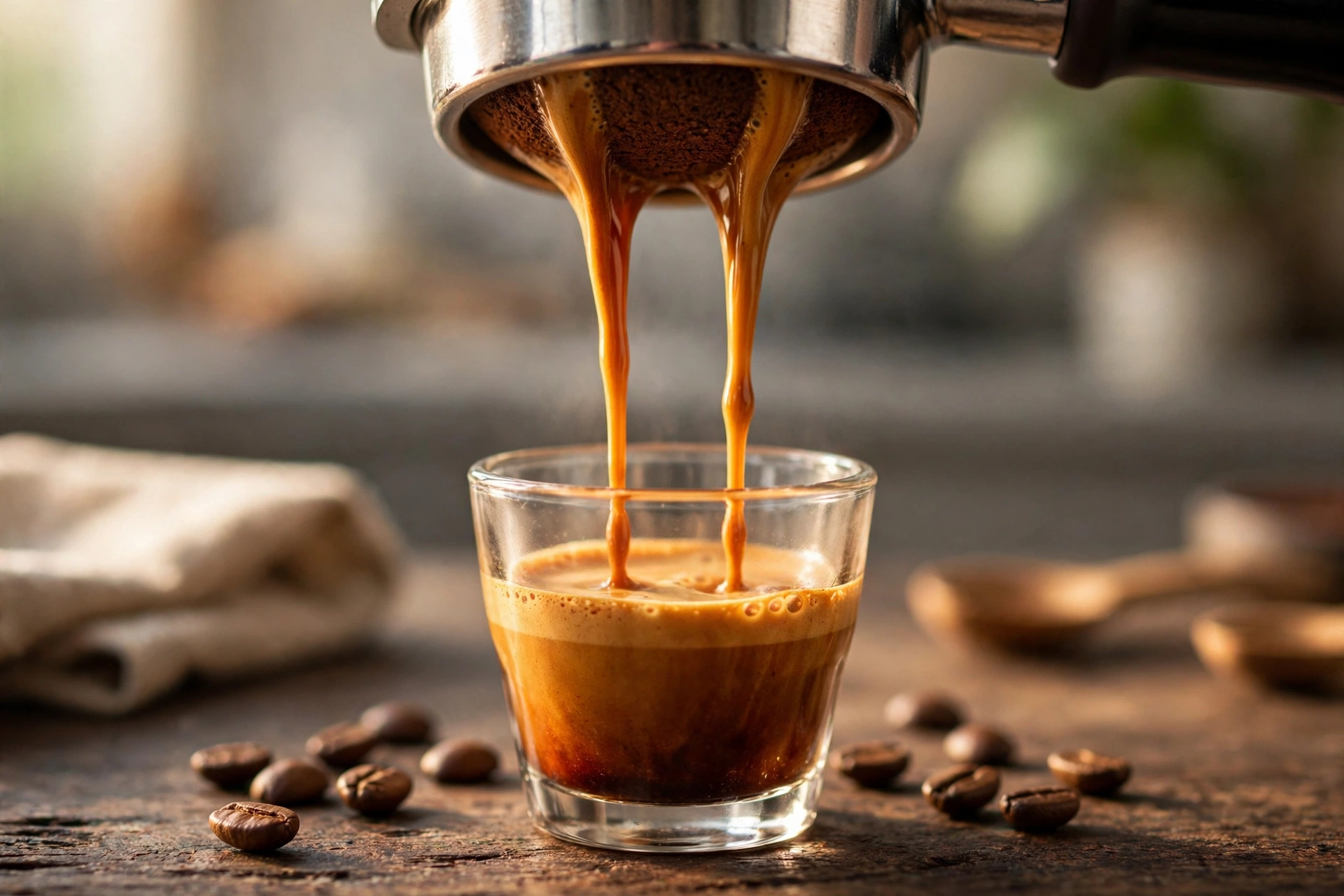
The short answer: illy Decaf is the best decaf espresso bean for most people — 100% Arabica, medium-roasted, and decaffeinated with liquid CO2 (caffeine at 0.1% or less) in illy’s pressurised nitrogen can. Kicking Horse Decaf is the best Swiss Water dark roast on a budget, and Lavazza DEK is the best robusta-led pick for drinkers who want thick crema. Prices and specs checked 2026-10-11. Prices vary by retailer; where sources disagreed we used the manufacturer’s or a major retailer’s current price.
Disclosure: we are an independent research desk and earn no commission on anything here. Vendor links on this page are plain links to manufacturer and retailer pages — no affiliate tracking. See our disclosure policy for how we stay independent.
We are a research desk, not a test lab: we synthesize owner reports, published measurements, roaster specifications, and food-science studies rather than claiming hands-on testing we have not done.
First principles: what decaffeination does to a bean
Decaffeination happens to green coffee, before roasting, and every commercial method works by the same logic: dissolve the caffeine out of the bean while leaving the flavour compounds behind. The three methods behind our five picks differ only in the solvent.
- Swiss Water Process: water as the only solvent. Green beans soak in hot water until the water is saturated with everything water can carry — flavour compounds included. That saturated solution then passes through activated-carbon filters that trap caffeine molecules specifically. The caffeine-free solution goes back over fresh beans, drawing out only caffeine because the flavour compounds are already in equilibrium. Result: 99.9% caffeine removal with no chemicals involved, and a process certified organic. Three of our five picks use it.
- Liquid CO2: pressurised gas as the solvent. Green beans are steam-soaked, then washed with liquid carbon dioxide under pressure, which binds to caffeine molecules and carries them off. illy uses this method, stating caffeine content of 0.1% or less in the finished bean. Lavazza’s DEK decaffeination is the same family: steam-treated green coffee, caffeine removed with CO2, then hot-air roasted.
- What the bean loses in the process. No method removes caffeine perfectly selectively. The soaking and extraction open up the bean’s cell walls, leaving decaf permanently more porous than the same bean un-decaffeinated. That single fact drives the two practical differences that matter for espresso: decaf pucks extract faster (dial finer), and decaf stales faster (buy small, store airtight).
One number to keep in mind: a regular espresso shot carries about 63 mg of caffeine; a University of Florida study measured decaf shots between 3 and 15.8 mg. Decaf is not caffeine-free — it is roughly twenty times less caffeinated, which is exactly what evening and pregnancy-safe espresso need.
How we chose these five
Every bean below is a year-round, whole-bean decaf positioned for espresso, sold widely in the US, with a disclosed decaffeination method and published specs from the roaster. We checked each against the manufacturer page and at least one major retailer, favoured roasts designed to push through the espresso method rather than generic filter decafs, and excluded flavoured decafs, ground-only products, and limited releases. Four of the five are Arabica-led; where Robusta appears it is doing its usual structural work — body, crema, and depth. If you also drink regular beans, see our dark roast espresso roundup for the full-caffeine side of the same shelf.
Comparison table
Prices and specs checked 2026-10-11. Prices vary by retailer; where sources disagreed we used the manufacturer’s or a major retailer’s current price.
| Bean | Bag size | Roast and decaf method | Typical price | Best for |
|---|---|---|---|---|
| illy Decaf | 8.8 oz (250 g) can | Medium; 100% Arabica; liquid CO2 | About $13 to $17 at US retailers | Best overall decaf, refined and easy |
| Lavazza DEK | 1.1 lb | Medium; Arabica + Robusta; steam + CO2 | About $15 to $19 at US retailers | Best robusta-led crema |
| Kicking Horse Decaf | 10 oz | Dark; Swiss Water Process | $16.99 at the roaster; often lower on Amazon | Best budget Swiss Water dark |
| Volcanica Decaf Espresso | 16 oz | Dark; Swiss Water Process | $29.99 at the roaster | Best specialty single-origin style |
| Organic Coffee Co. Hurricane Espresso Decaf | 2 lb | Medium-dark; Swiss Water Process | $32.99 at the brand (currently sold out) | Best organic value in a big bag |
The five beans, in depth
1. illy Decaf — best overall decaf
illy Decaf is the Classico expression of illy’s nine-Arabica blend: medium-roasted, decaffeinated with the liquid CO2 method to 0.1% caffeine or less, and packed in illy’s signature pressurised can — nitrogen under pressure with the air removed. That packaging matters more for decaf than for regular beans: decaf’s higher porosity makes it stale faster, and the air-free seal holds the aromatics the roasting developed. US retailer prices we found clustered between about $13 and $17 for the 250 g can (illy’s own US page renders its price via script, so we could not extract the manufacturer’s list price).
Choose it when you want the closest thing to a normal, refined espresso without the caffeine: it extracts easily, behaves predictably in a 1:2 ratio, and carries the caramel and toasted-bread direction of illy’s regular blend. Its weakness is roast depth — as the mildest of illy’s intensities, it will not satisfy drinkers who want decaf to hit dark and bold. The 8.8 oz can is also a two-to-three-week supply for a daily drinker, which is exactly the freshness window decaf wants anyway.
2. Lavazza DEK — best robusta-led crema
Lavazza DEK is the decaf of Italy’s most-exported espresso blend: a Brazilian and Vietnamese Arabica-plus-Robusta blend, steam-treated and CO2-decaffeinated, then roasted to what Lavazza’s own product spec calls medium (some retailer listings call it a dark espresso roast — expect medium with dark-roast behaviour). Lavazza names the espresso machine as the intended preparation, and the dried-fruit tasting direction follows the blend. Retailer prices ran about $15 to $19 for the 1.1 lb bag; Lavazza’s US site focuses on ground DEK, so buy the whole-bean Dek from specialty retailers rather than the roaster directly.
Pick it if your priority is the visual and textural side of espresso — the robusta fraction builds the thick, persistent crema that pure-arabica decafs sometimes struggle to sustain. One naming caution: Lavazza also sells a “Dek Filtro” variant aimed at filter brewing; make sure the bag says the espresso DEK, not Filtro. Its weakness is roast-date transparency — the big retail bags carry best-by dates, not roast dates, so buy from retailers that move stock quickly.
3. Kicking Horse Decaf — best budget Swiss Water dark
Kicking Horse’s Decaf is the dark-roast answer for buyers who want Swiss Water certification at a grocery-accessible price: Swiss Water Process, Certified Organic, Fairtrade, and Kosher, roasted dark in the Canadian Rockies. The roaster’s own store lists the 10 oz bag at $16.99, but Amazon typically sells it around $14 with frequent promos dipping lower — the widest brand-vs-market price gap in this roundup, so compare both before buying.
Buy it for boldness per dollar: the dark roast gives the bittersweet, full-bodied cup that pushes through milk well, and the organic-plus-fairtrade certifications are the strongest ethical credentials here. Its weakness is subtlety — this is a straightforward dark cup, not a nuanced one, and the 10 oz bag is the smallest in the roundup. A 2.2 lb option exists at the roaster ($43.99) for high-volume drinkers, but remember decaf stales faster than regular; freeze weekly portions airtight if the household will not finish it inside three weeks.
4. Volcanica Decaf Espresso — best specialty pick
Volcanica’s Decaf Espresso is the specialist’s decaf: a dark roast, Swiss Water Processed to 99.9% caffeine-free, 100% chemical-free, Kosher certified, and described by the roaster as low-acid with sweet-caramel notes. Volcanica also publishes mold and mycotoxin lab testing as a brand-level claim, and roasts in Atlanta, Georgia. The roaster lists the 16 oz bag at $29.99, with 3 lb and 5 lb options for heavy users — making it the priciest pick per bag here by a clear margin.
Pick it when the other decafs taste flat to you: the low-acid positioning and specialty sourcing aim at the same flavour density that specialty regulars expect from their beans. Its weaknesses are price and availability friction — $29.99 for 16 oz is roughly double the Kicking Horse street price, and we could not find a current Amazon US listing for this SKU, so the roaster’s own store is the reliable channel.
5. Organic Coffee Co. Hurricane Espresso Decaf — best organic value in a big bag
Hurricane Espresso Decaf is the volume play: a 2 lb bag of USDA Organic, Central American-blend, medium-dark roasted beans, decaffeinated with the Swiss Water Process (the brand’s own store states Swiss Water; some Amazon listing copy says “natural water process” — the brand’s site is authoritative). The brand’s store lists it at $32.99, which works out to the best per-ounce price in the roundup, but it was showing sold out at our check on 2026-10-11 — verify availability before planning around it.
Buy it if you drink decaf all day and want one big bag at the lowest cost per shot, with organic certification attached. The tasting direction is milk chocolate, dark berries, and brown spice — approachable rather than adventurous. Its weakness, beyond the current sold-out status, is origin specificity: the Central American blend is built for consistency, not for tasting the farm. This is the workhorse bag, not the connoisseur one.
How to choose among the five
- Refined, easy, Italian-style decaf: illy Decaf. The CO2 method and the pressurised can suit decaf’s fast-staling chemistry.
- Thick crema and bold body: Lavazza DEK. The robusta fraction does structural work no pure-arabica decaf can match.
- Dark Swiss Water decaf at the lowest price: Kicking Horse Decaf. Check Amazon against the roaster’s own store — the gap is wide.
- Specialty-grade decaf with the cleanest spec sheet: Volcanica Decaf Espresso. Paying a premium for low-acid positioning and lab testing.
- Organic decaf for a high-volume household: Organic Coffee Co. Hurricane Espresso Decaf. Confirm stock first; the 2 lb bag is the value king when available.
Buying and dialling rules that matter more than brand
Buy whole beans and grind right before each shot — decaf stales faster than regular, so pre-ground decaf is the worst of both worlds. Rest fresh decaf about five to seven days after roasting, store it sealed, cool, and dark, and finish the bag inside two to three weeks. Because decaf pucks run fast, grind one or two steps finer than your regular setting and adjust in small increments — decaf produces slightly more fines, and jumping too far too fast will choke the shot.
Dial in the same way regardless of brand: constant dose by weight, about twice the beverage weight in 25 to 35 seconds, grind finer for sour shots, coarser for bitter slow ones. Decaf forgives less than regular in the grind window, so let the bean become the variable only after the shot is running to time. For the full picture of the coffee species behind these blends, browse the Coffee Beans hub.