Arabica (Coffea arabica) is the species behind roughly 60% of the world’s coffee and nearly all specialty espresso. It’s the sweet, complex, aromatic one — and also the fussy one: it only thrives at altitude, in cool weather, with careful farming.
What arabica is
Arabica is one of coffee’s commercial species, first cultivated in Yemen from Ethiopian stock centuries ago. The plant is small and relatively delicate. Its beans are oval and elongated with a curved centre crease — the easiest visual tell against robusta’s rounder, straighter-creased beans.
Most of what you drink as “specialty coffee” is arabica, and most espresso blends are arabica-dominant. When a bag says “100% arabica,” that’s the baseline claim of quality in the commodity market — though as the robusta page explains, the species alone doesn’t guarantee a good cup.
Where it grows, and why altitude matters
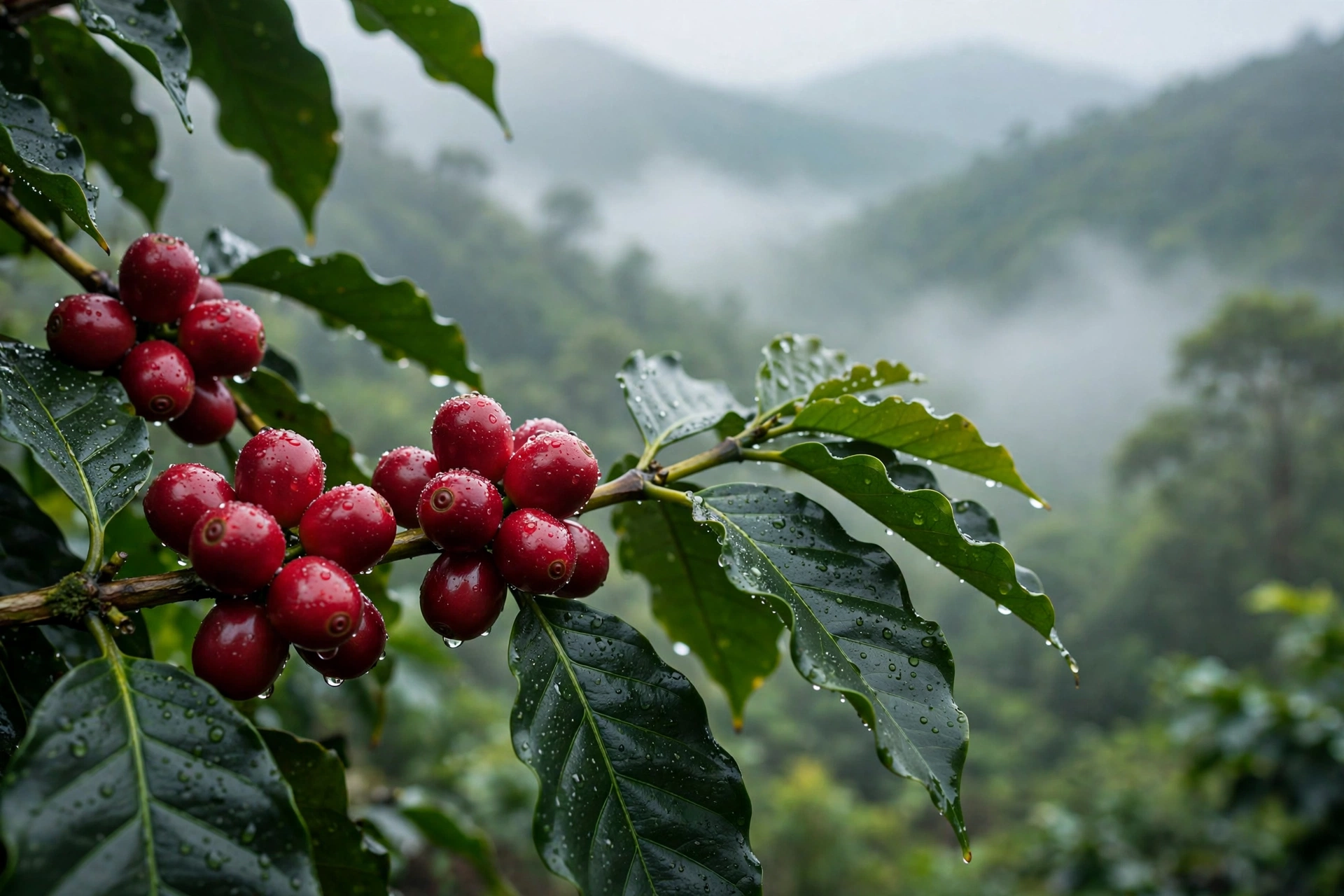
Arabica grows between roughly 900 and 2,200 metres above sea level, in cool temperatures (15-24°C) with steady rainfall and often shade. Major regions include Ethiopia and Kenya, Colombia and Brazil, Guatemala and Costa Rica.
Altitude isn’t trivia — it’s the mechanism behind arabica’s flavour. Cooler mountain air slows cherry maturation, so the bean develops more slowly and grows denser, accumulating more sugars and organic acids. Denser beans roast more evenly and carry more flavour complexity. This is why “high-grown” is a genuine quality signal, not marketing: the same variety tastes noticeably better from 1,800m than from 900m.
The trade-off is vulnerability. Arabica is susceptible to coffee leaf rust and other diseases, and climate change is pushing suitable growing zones further uphill — a real long-term supply concern the industry is already feeling.
Taste profile
Expect sweetness first: chocolate, caramel, and nuts as the base, with fruit (berry, citrus, stone fruit) and floral notes (jasmine is the famous one) depending on origin and processing. Acidity is bright but pleasant — the sparkling kind, not the sour kind — and the body is medium and silky rather than heavy.
Washed-process arabicas taste cleaner and brighter; natural-process ones (dried in the cherry) taste fruitier and heavier. That processing difference often matters more to the cup than the country on the bag.
Caffeine and body
Arabica runs 1.2-1.5% caffeine by weight — roughly half of robusta. In the cup that means a gentler kick: a double shot of straight arabica espresso typically delivers around 120-150 mg. The body is lighter and less syrupy than robusta, which is why arabica shots can taste “thin” to drinkers used to Italian-style blends.
Arabica in espresso
Arabica is the default for specialty espresso because its sweetness survives the concentrated format. Two practical notes for the home barista:
- Dialling in is less forgiving. Arabica’s prized acidity turns sour fast if you under-extract. If your arabica shot tastes sharp rather than bright, you’re grinding too coarse or pulling too short — tighten the grind or extend the yield slightly.
- Roast level matters more than with robusta. Light-medium to medium roasts preserve origin character. Dark roasts bulldoze it: a dark-roasted Ethiopian and a dark-roasted Colombian converge on the same roasty flavour, which wastes the premium you paid for either.
Varieties worth knowing
Arabica isn’t one bean — it’s a family. A few names you’ll see on bags: Typica and Bourbon (the classic heirloom varieties, sweet and balanced), Gesha/Gesha (intensely floral, famously expensive), SL28/SL34 (Kenya’s signature: blackcurrant-like brightness), and Caturra/Catuai (compact, high-yield Brazilian workhorses). You don’t need to memorise them — just know that the variety line on a bag is a real flavour clue, not decoration.
Buying arabica for espresso
Look for a roast date within the last few weeks, whole beans (never pre-ground for espresso), and a roast level matched to your taste: light-medium for clarity, medium for balance. Our bean roundups compare specific options, and the beginner’s bean guide covers the freshness rules that matter more than any brand name.